Fish Tank Aquarium Vacuum Gravel Cleaner with 50 ft PVC Hose and Brass Adapters
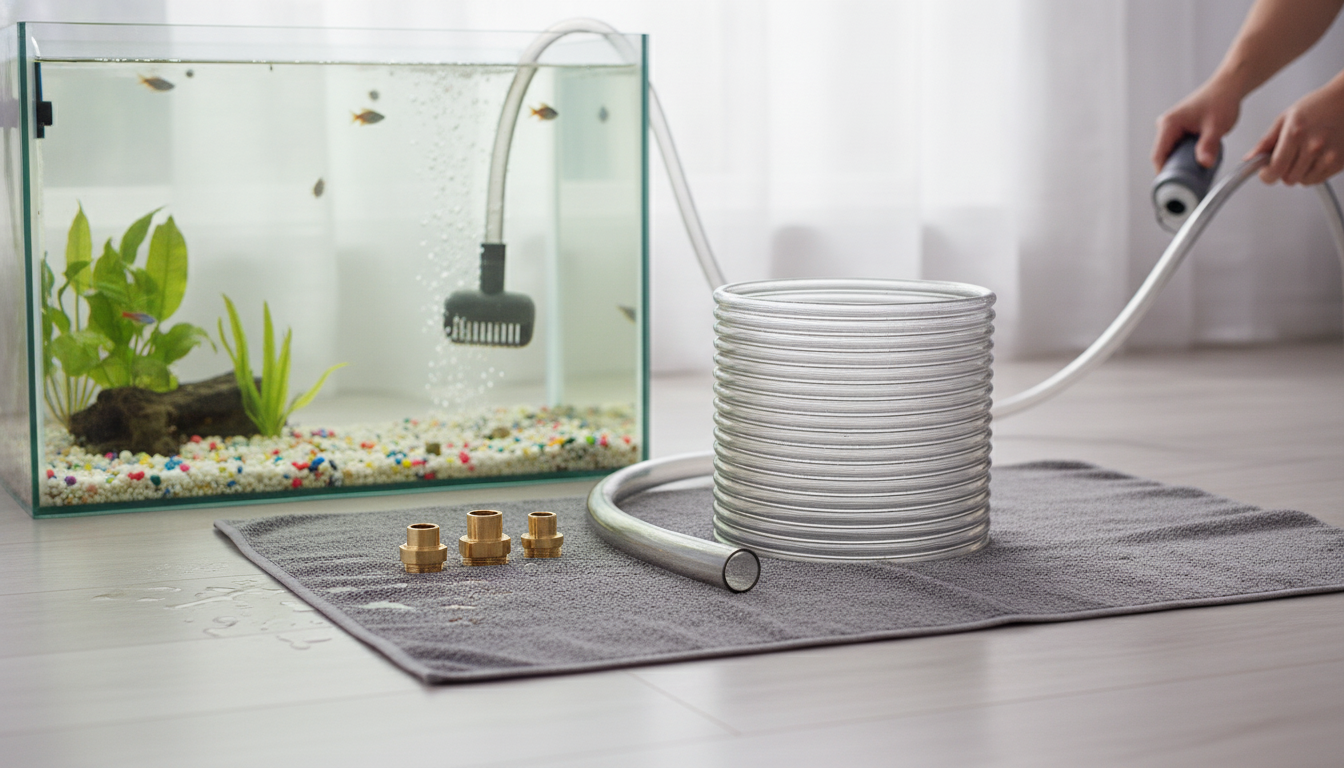
A gravel vacuum that can reach a sink, drain, or bucket without constant lifting makes routine tank cleanups faster and less messy. This setup pairs a long PVC hose with brass adapters to help create secure connections and steady flow for gravel cleaning and water changes in freshwater or saltwater aquariums. For more guidance, see Make Your Own Gravel Vacuum for Your Aquarium – Instructables.
What This Gravel Cleaner Is Designed to Do
- Remove debris trapped in substrate while preserving beneficial bacteria living on and between gravel grains
- Support partial water changes by siphoning water out while cleaning the tank bottom
- Reduce splashing and spills by extending the discharge point farther from the aquarium
- Improve consistency of flow using rigid, durable brass adapters for common connection scenarios
Routine siphoning helps control waste before it breaks down into ammonia and other nitrogen compounds. If you’d like a refresher on how tank biology processes waste, the nitrogen cycle overview from Britannica is a helpful reference.
Key Components and Why They Matter
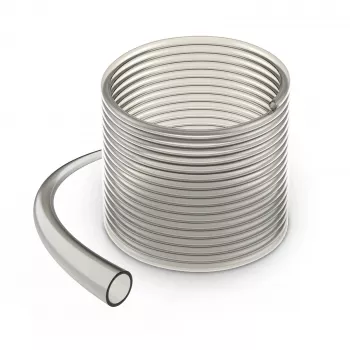
- 50 ft PVC hose: provides reach to a sink, floor drain, bathtub, or large waste container—especially useful for larger tanks or when the aquarium is far from a door.
- 3 brass adapters: intended to create tighter, more durable connections than plastic fittings in areas that get frequent tightening/loosening.
- Gravel vacuum intake section: designed to lift and tumble gravel so waste rises into the siphon while heavier substrate falls back down.
- Hose length management: extra length can be looped and secured to prevent kinks that can reduce siphon strength.
Quick Start Setup Checklist
- Rinse hose and vacuum parts with clean water (avoid soap or detergents).
- Plan the discharge route: ensure the end of the hose stays lower than the aquarium waterline to maintain siphon.
- Choose the brass adapter that best matches the intended connection (sink/drain/waste container setup).
- Secure the discharge end so it cannot whip or slide when flow starts.
- Turn off heaters during water removal to prevent running dry; keep filters running only if their intake will remain submerged.
For general aquarium cleaning fundamentals and safe routines, the guides at The Spruce Pets are a solid starting point.
How to Gravel Vacuum Without Losing Too Much Water
- Start the siphon and position the intake vertically into the substrate until debris rises; lift slightly so gravel drops back down.
- Work in sections: clean one area at a time to avoid over-disturbing the tank and stressing fish.
- Target high-waste zones first (under hardscape edges, near feeding areas, around plant bases if safe for roots).
- For planted tanks: hover higher and avoid deep plunging near root systems; focus on visible detritus on the surface.
- Stop at the planned water-change volume (commonly 10–30% depending on stocking and maintenance routine).
A good rhythm is “dip, lift, move”: dip until waste rises, lift until gravel settles, then slide to the next patch. This keeps the substrate from being over-agitated while still pulling out the material you don’t want decomposing in the tank.
Using a Long Hose: Flow, Control, and Placement Tips
- Keep the hose as straight as possible; coils and tight bends reduce flow rate.
- Ensure the discharge end remains below the tank’s waterline throughout the process.
- If flow slows, check for kinks, trapped air pockets, or a gravel jam at the intake.
- Use a clip or weighted holder at the discharge point to prevent the hose from moving as water exits.
- If draining to a sink or tub, confirm the adapter connection is snug and the hose is not under tension.
With 50 feet of hose, the biggest win is flexibility—routing through a doorway, down a hallway, or into a tub—without turning the water change into a bucket relay. The tradeoff is hose management: wide loops, gentle curves, and secure placement keep suction strong.
Feature Snapshot: Long-Hose Gravel Cleaner vs Typical Short Siphons
Not every setup needs extra reach. If your tank sits near a drain and you prefer a compact tool, a short siphon can feel simpler. If the aquarium is in a living room, office, or basement, longer routing can reduce spills and save time.
At-a-Glance Comparison
| Feature |
This 50 ft hose + brass adapters setup |
Typical short siphon (6–10 ft) |
| Best for tank location |
Far from sink/drain; multi-room reach |
Near a bucket or nearby drain |
| Connection durability |
Often stronger with brass fittings |
Usually plastic fittings |
| Spill risk |
Lower if routed securely to drain |
Higher if buckets are carried/handled frequently |
| Hose management |
Needs kink prevention and routing plan |
Simpler to handle |
| Ideal tank size |
Medium to large tanks; frequent water changes |
Small to medium tanks |
Care, Cleaning, and Storage
Common Problems and Fast Fixes
When This Type of Cleaner Is a Strong Fit
In-Stock Picks
FAQ
How often should gravel be vacuumed in a fish tank?
Most tanks do well with gravel vacuuming weekly to every other week, depending on stocking levels, feeding, and filtration. For stability, clean in sections rather than trying to deep-clean the entire bottom in one session.
Can a gravel vacuum remove beneficial bacteria from the substrate?
Beneficial bacteria primarily live on surfaces, so gravel vacuuming mostly removes trapped waste rather than “resetting” your tank. Avoid aggressive deep-cleaning of the entire substrate at once, and never rinse filter media in untreated tap water.
Why does the siphon stop when using a long hose?
Long hoses are more sensitive to height differences, kinks, and tiny air leaks at connections. Keep the discharge end below the aquarium waterline, straighten bends, check adapters for snug fit, and clear any gravel clog at the intake.
Recommended for you




Leave a comment