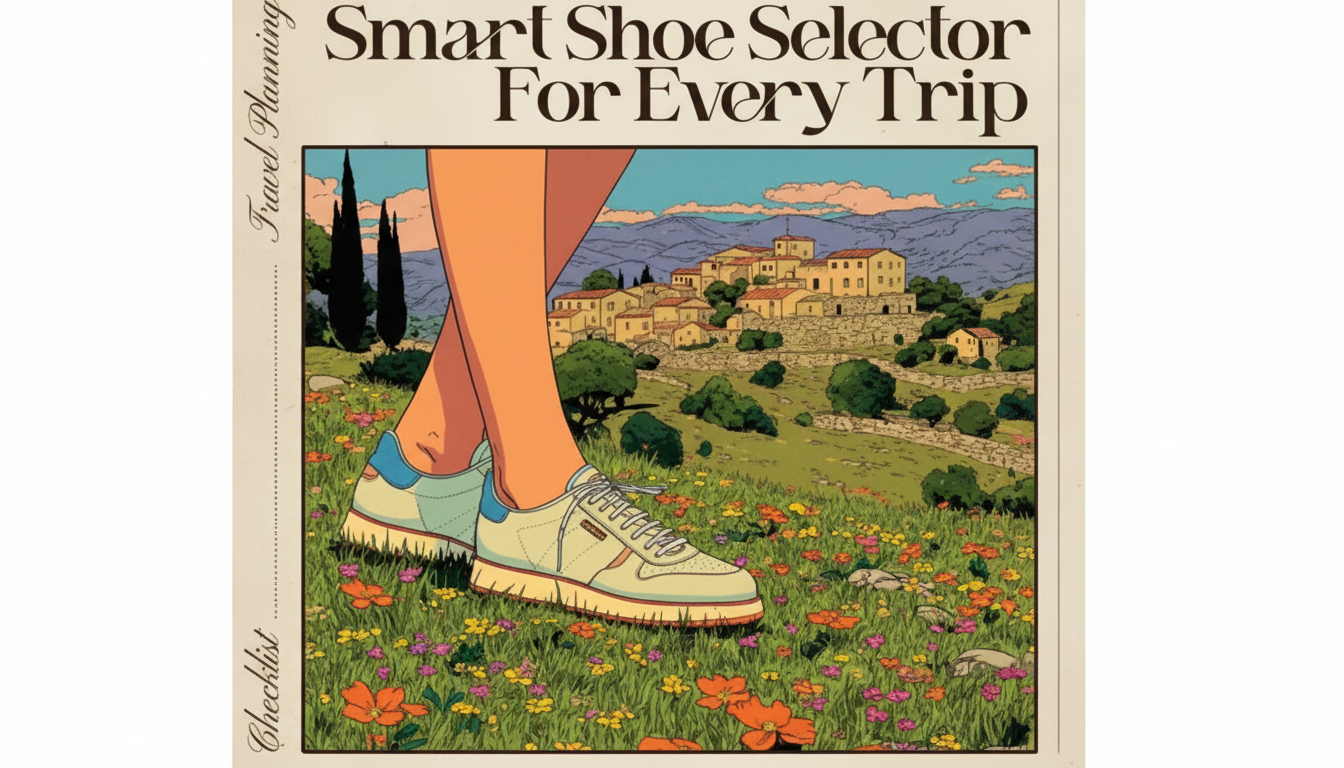
Shoes take up space, add weight, and can make or break a trip. A smart selection process helps match footwear to weather, terrain, activities, and luggage limits—so every pair earns its place. Use the printable and digital checklist approach below to narrow options fast, avoid duplicates, and pack for comfort, safety, and style.
Before pulling pairs from the closet, lock in the trip facts that actually change what belongs in your bag.
If your itinerary includes one “big walking day,” treat it as the anchor. That day determines your core shoe—everything else supports it.
Overpacking usually happens when multiple pairs do the same thing. The fix is assigning a job to each pair and cutting duplicates.
A practical way to test overlap: if you’d wear either option with the same outfits on the same day, you only need one of them.
Use this table as a first draft, then adjust for climate and dress code. Neutral colors usually pair with more outfits, which helps keep the shoe count down.
| Trip scenario | Best core pair | Add-on pair (if needed) | Skip this common mistake |
|---|---|---|---|
| Weekend city break (spring/fall) | Cushioned walking sneakers | Packable flats/loafers for dinners | Bringing two similar sneakers |
| Summer beach + town | Breathable sandals with support | Light sneakers for long walks/transit | Only flip-flops (no arch support) |
| Rainy city (cool weather) | Water-resistant sneakers or ankle boots | Indoor-friendly slip-on for hotel/planes | Suede or non-treated canvas |
| Light hiking + sightseeing | Trail runners | Casual shoes for evenings | Bulky hiking boots for easy trails |
| Business trip (mixed meetings + walking) | Comfortable dress shoes/loafers | Walking sneakers for commute | Brand-new dress shoes without break-in |
| Winter trip (snow/ice possible) | Insulated waterproof boots with grip | Indoor/restaurant shoes (compact) | Smooth soles with poor traction |
When space is tight, it’s usually smarter to pack one excellent walking shoe and add either a weather-ready shoe or a dressier option—rarely both.
Foot pain is a trip thief. These checks take minutes and can save whole days of walking.
For general foot-health guidance on fit and supportive footwear, the American Podiatric Medical Association is a solid reference: https://www.apma.org/.
Two trips with the same itinerary can demand different shoes if the ground and weather change.
If you’re traveling internationally or managing health considerations, it also helps to review destination-specific guidance ahead of time: CDC Travelers’ Health.
For airport screening rules that may affect what you wear and how you pack (including shoe-related screening expectations), check: TSA: What Can I Bring?.
A structured selector reduces overpacking by turning trip details into a short list of roles, then matching footwear to those roles. If you want the system in a ready-to-use format, the Smart Shoe Selector for Every Trip (Printable & Digital Packing Guide) keeps everything in one place—trip snapshot, role assignment, and final pack check.
For a bright, walk-ready option that can work as a core city shoe on many itineraries, consider Nike Women’s Fuchsia Slip-On Lace-Up Sneakers (best when the forecast is mostly dry and you want comfort for long urban days).
Most trips work best with 2–3 pairs: one core walking pair, plus one add-on for either weather protection or dress code. Add a third only if it covers a truly different job (trail grip, snow traction, formal event) that your core pair can’t handle.
Pick a comfortable walking shoe as your core, then add one weather-ready option with better traction or water resistance. If you can’t add a second pair, prioritize grip and materials that dry quickly over delicate fabrics.
Separate soles with shoe bags or shower caps, and stuff the toes with socks to help shoes hold their shape. Wear the bulkiest pair in transit and pack lighter pairs around softer items to reduce pressure.






Leave a comment