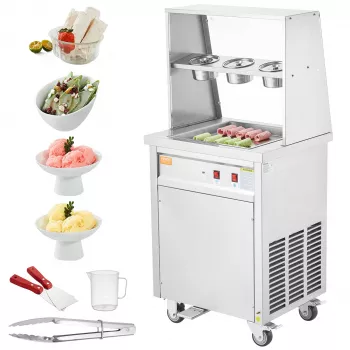
A fried ice cream roll machine (often called a rolled ice cream cold plate) turns a liquid base into thin sheets you scrape into tight rolls within minutes. The best results come from matching plate size and cooling power to your serving volume, using the right tools, and following a repeatable workflow that keeps texture creamy—not icy—and the station clean.
A fried ice cream roll machine uses a super-cold metal plate to flash-freeze an ice cream base. You pour the mix, add ingredients, spread it into a thin layer, and scrape it into rolls once it sets.
Rolled ice cream looks premium, feels custom, and can be produced in small batches on demand—making it a fit for several settings.
Two machines can look similar but behave very differently under real service. The following features have the biggest impact on roll quality and speed.
Buying the right unit is less about the fanciest specs and more about matching the machine to your busiest hour and your setup constraints.
| Use case | Priority | Why it matters |
|---|---|---|
| Home kitchen | Easy controls + smaller footprint | Simplifies setup, storage, and learning curve |
| Parties/events | Portability + fast recovery | Keeps the line moving with minimal downtime |
| Pop-up vending | Durable build + stable cold plate | Handles repetitive scraping and rapid batches |
| Café add-on | Consistency + easy cleaning | Protects product quality and staff efficiency |
Great rolls come from a consistent routine. Small changes—like pouring too much or scraping too steep—can turn clean curls into flakes.
For food safety and clean service habits, follow established guidance for cold foods and sanitation basics from the USDA Food Safety and Inspection Service and operational standards referenced in the FDA Food Code.
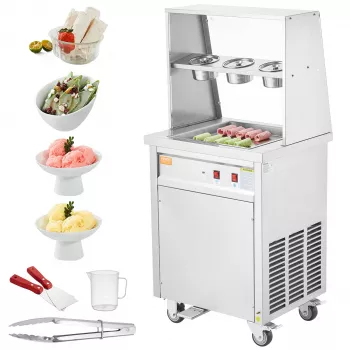
If you want a straightforward starting point for home, parties, and light vending, consider the Fried Ice Cream Roll Machine. Plan for enough counter space not just for the cold plate, but also for mix-in bins, cups, and finished servings.
For smoother service, keep a small “station kit” within reach: an extra scraper, gloves, paper towels, and a food-safe sanitizing spray. If you’re building a shopping checklist for events and seasonal buys, the Shop Smart, Save Big This Prime Day | What to Buy on Amazon Prime Day Guide | Digital Download Checklist & eBook can help organize what to stock and when.
Yes. Both names refer to a cold-plate machine that freezes a liquid base into a thin sheet that gets scraped into rolls; “fried” is a style term and doesn’t involve oil frying.
This usually happens when the base is too watery, the sheet is too thick, or the plate is set too cold. Spread the mix thinner, angle the scraper lower, and slightly raise the temperature until the sheet curls smoothly.
Most servings take a few minutes once the plate is fully pre-chilled. During back-to-back orders, recovery time between batches can be the main factor that slows service.




Leave a comment