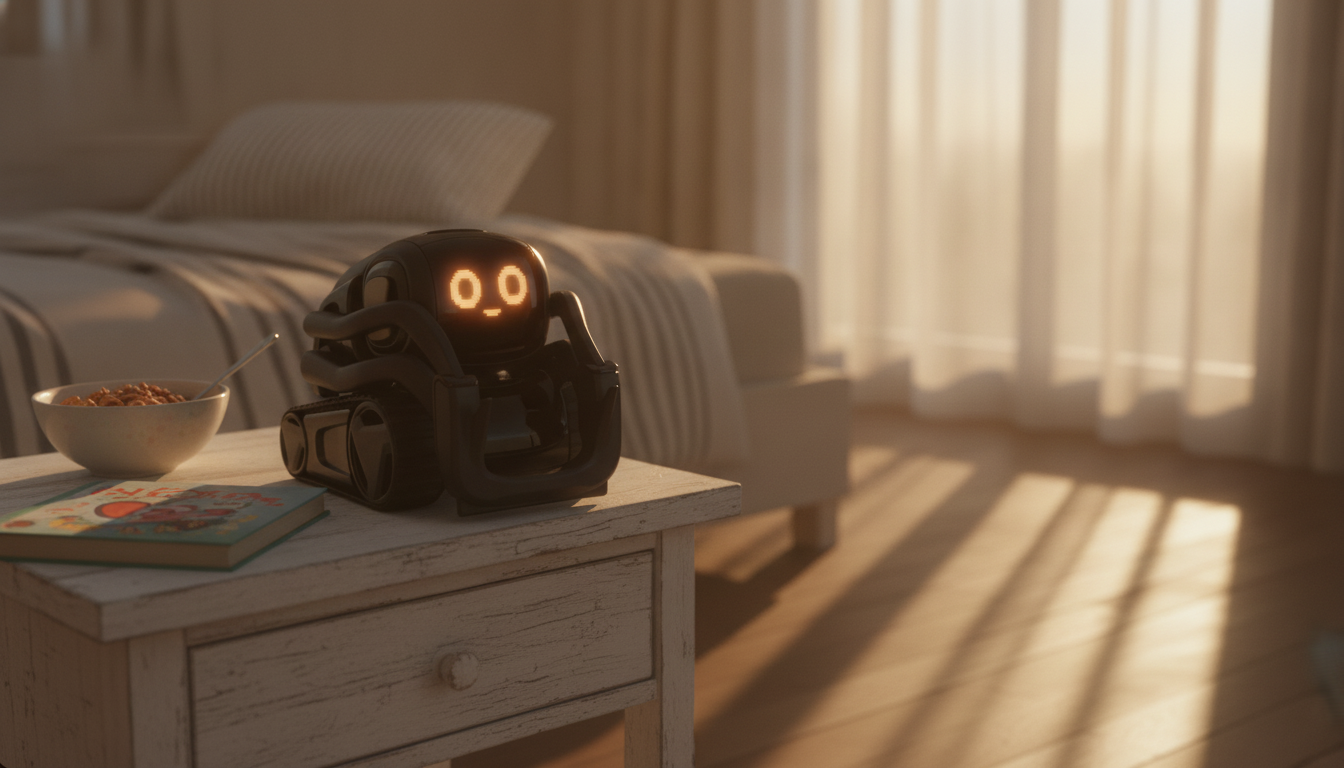
Mornings and bedtime routines can feel smoother when kids have a consistent, engaging cue to wake up, wind down, and stay on schedule. A robot-style companion alarm clock adds a playful presence while still functioning as a practical timekeeper for families managing school-day rhythms. Instead of negotiating “five more minutes” every morning (or stretching bedtime into a marathon), a friendly bedside device can help make expectations feel more predictable and less personal.
A companion-style kids’ alarm clock is meant to do more than show the time. It’s designed to become a steady part of the room—one that supports routines without turning the bedroom into a screen-filled space.
Many kids dislike abrupt transitions—especially from sleep to “time to move.” A character-like clock can make the experience feel more inviting and less like a sudden command.
Families also tend to appreciate any tool that reduces the need for a parent to become the “alarm clock,” especially during busy school weeks.
A robot companion clock can support multiple parts of a child’s day, not just wake-ups. When used consistently, it becomes a simple “time anchor” kids can understand.
For general sleep guidance by age and routine ideas, resources from the American Academy of Pediatrics and the CDC can be helpful reference points.
Not every “kids clock” fits every household. Before choosing one, it helps to think about how your child wakes up, what keeps them calm at night, and how independent you want them to be with settings.
| Feature | Why it matters | What to look for |
|---|---|---|
| Adjustable volume | Prevents wake-ups that are too startling or too quiet | Multiple volume steps; audible across the room if needed |
| Display brightness control | Supports sleep-friendly darkness | Dim mode or adjustable brightness |
| Simple alarm setting | Kids can learn independence faster | Clear controls; easy to confirm the alarm is set |
| Stable base | Reduces tipping or falls from a nightstand | Non-slip feet; balanced design |
| Power reliability | Avoids missed wake-ups | Consistent power source; backup behavior explained |
| Age-appropriate design | Keeps it engaging without being distracting | Friendly look; not overly stimulating at bedtime |
If the clock includes any connected or app-based features, it’s worth reviewing privacy and child data practices. The FTC’s guidance on COPPA is a useful starting point for understanding what to look for in kid-focused devices and services.
The Smart AI Robot Companion & Alarm Clock for Kids is a bedside-friendly companion-style clock intended to make routines feel more approachable. It’s a strong pick for families who want one dedicated device to support a consistent schedule—especially for kids who struggle with mornings, feel anxious about transitions, or simply respond better to a “buddy” than a standard alarm.
For a cuddly, bedtime-friendly option, pair the routine with the Adorable Capybara Plush Pillow as a calming add-on that stays on the bed and signals rest time.
Preschoolers often benefit most when a parent controls the settings and uses the clock as a consistent cue, while early elementary kids can start learning to set and follow the alarm independently. Older kids usually do best with simple controls, a dim display, and a routine-focused setup that supports school-day consistency.
It can if the display is too bright, sounds are too engaging, or interactions feel like playtime. Using dim settings, keeping the room calm, and limiting extra features during the wind-down window helps the clock stay routine-focused instead of stimulating.
Check whether the device connects to Wi‑Fi or Bluetooth, whether it uses voice recording, and what app or account is required. Review the privacy policy and only enable features your family actually needs, keeping child-focused privacy best practices in mind.





Leave a comment