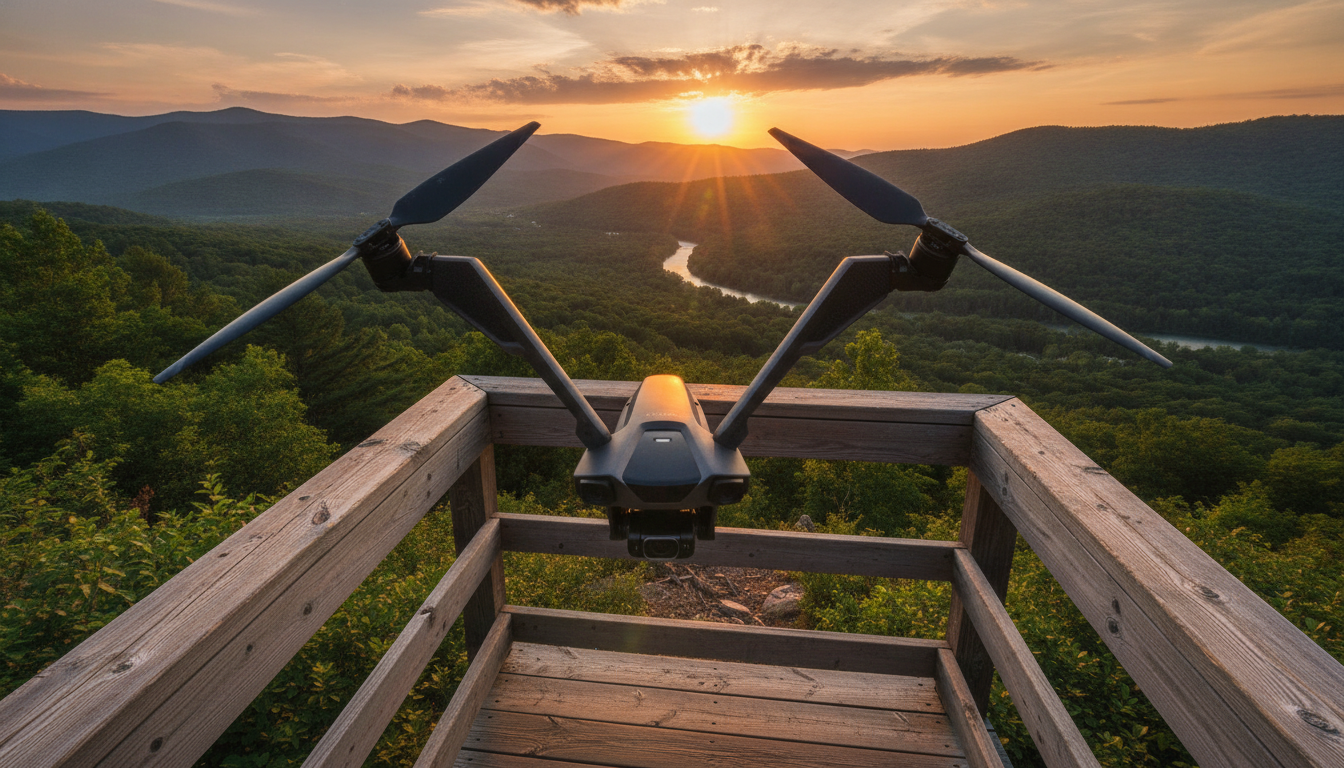
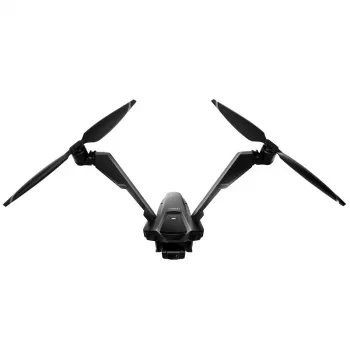
The V-Coptr Falcon stands out from typical quadcopters with a distinctive V-shaped bi-copter layout built for stable, cinematic flying. With a 4K camera paired to a 3-axis gimbal, it’s aimed at creators who want smoother footage, controlled movement, and a drone that feels purpose-built for video rather than casual hovering.
Quick snapshot of the V-Coptr Falcon
- V-shaped bi-copter design rather than a traditional four-motor layout
- 4K camera system designed for aerial video capture
- 3-axis gimbal stabilization to reduce shake and horizon drift
- Best suited for landscape reveals, tracking shots, and controlled pans/tilts
- Premium price point that fits serious hobbyists and content creators
Why a V-shaped bi-copter changes the flying experience
Most camera drones people recognize are quadcopters: four rotors arranged in a square, tuned for predictable hover and easy handling. The Falcon’s V-shaped bi-copter approach is a deliberate departure, and that geometry can change how the drone feels in the air—especially when the goal is smooth, cinematic movement rather than tight, twitchy maneuvers.
- Different efficiency and sound profile: Fewer rotors can mean a different balance of lift efficiency and acoustic character compared with common multi-rotor designs. That can be beneficial when filming in quieter locations where an aggressive “buzz” draws attention.
- Smoother directional transitions: The V configuration is designed to support cleaner arcs and sweeping turns. For video, that matters because curved flight paths often look more natural than “point-and-stop” moves.
- Wind and braking feel: Frame geometry influences how the aircraft presents itself to the wind and how it scrubs speed. This can affect how confidently you can hold a line during lateral movement, then ease into a stop without a jarring correction.
- A learning curve for quad pilots: If your muscle memory is built on typical quadcopters, expect some adjustment. The best results usually come from slower, more deliberate inputs—especially when filming gimbal-forward shots.
4K camera + 3-axis gimbal: what it means for real footage
Specs only matter if they show up in the final clip. A 4K camera paired with a mechanical 3-axis gimbal is a classic recipe for footage that looks intentional—especially when you’re moving through space rather than hovering in place.
- 4K capture gives editing flexibility: Higher resolution provides extra detail for reframing, light cropping, and subtle stabilization in post without immediately falling apart. It’s also useful for delivering in 1080p while keeping a sharper, downsampled look.
- Mechanical stabilization reduces “drone wobble”: A 3-axis gimbal actively counteracts pitch, roll, and yaw disturbances. That means turns, wind gusts, and small pilot corrections are less likely to translate into visible shake.
- Cleaner horizon control: Horizon drift is most noticeable during side-to-side slides and slow pans. A solid gimbal helps keep that horizon level, which is one of the easiest ways to make aerial footage feel premium.
- Stabilization complements good piloting: A gimbal can’t turn abrupt stick movements into a graceful shot. Slow inputs, planned flight lines, and steady speed changes still matter for cinematic results.
Where the Falcon fits best: shooting scenarios
The Falcon is most rewarding when used like a camera platform, not a toy—planned moves, repeatable paths, and a focus on motion that feels controlled. Here are shooting styles where its design and stabilization can shine.
Practical ownership considerations before buying
- Budget for essentials: Spare propellers, a safe carrying solution, and organized storage for batteries can prevent small mistakes from turning into canceled shoots.
- Plan a practice routine: Start in a wide open area with gentle wind. Keep sessions short and focus on smooth stick inputs, steady altitude, and gradual yaw for clean pans.
- Know the rules where you fly: Regulations often apply regardless of whether you’re filming professionally or recreationally. Official starting points include the FAA UAS guidance and EASA drone regulations.
- Have a simple footage workflow: MicroSD formatting, file naming, backups, and basic color correction are what turn “captured footage” into “deliverable footage.”
- Expect a premium learning cycle: If you’re moving up from simpler drones, give yourself time to learn smoother gimbal-forward flying and repeatable shot patterns.
Pre-flight checklist (short form)
| Category |
What to confirm |
| Airspace |
Allowed location and altitude limits, no temporary restrictions |
| Hardware |
Arms/props secure, no cracks, gimbal guard removed if applicable |
| Power |
Batteries charged, controller charged, spares packed |
| Storage |
Card installed, enough space, correct format |
| Safety |
Home point set, return-to-home behavior understood, spectators kept clear |
Who should choose the V-Coptr Falcon (and who shouldn’t)
In-stock picks to consider
FAQ
Is a bi-copter harder to fly than a quadcopter?
It can feel different, especially if most of your flight time is on quadcopters. Start in a wide open area, keep your inputs slow and smooth, and practice basic moves (hover, straight lines, gentle turns) before attempting complex cinematic shots.
What does a 3-axis gimbal improve compared with digital stabilization alone?
A mechanical 3-axis gimbal counteracts motion in real time to keep footage smoother and the horizon more level. Digital stabilization can help, but it may crop the image and can introduce warping artifacts in fast motion.
Do drone rules apply even for recreational filming?
Yes—rules generally apply regardless of whether you’re flying for fun or capturing video. Check registration requirements, airspace restrictions, and safety guidance before your first flight.
Recommended for you





Leave a comment