Emotional intelligence shapes how leaders handle pressure, make decisions, and communicate through uncertainty. The good news: EQ isn’t a personality trait you either “have” or “don’t.” With the right routines and a few well-chosen AI supports, EQ can be trained like any other professional skill—measurable, repeatable, and aligned to real workplace moments such as difficult conversations, performance feedback, conflict, and change leadership.
When stress rises, the body can shift into fight-or-flight patterns that narrow attention and amplify reactivity—one reason “small” workplace moments can suddenly feel big. The American Psychological Association’s overview on stress effects on the body is a helpful reminder that emotional regulation is also physiological. Strong EQ builds the pause that lets judgment come back online.
Modern leadership EQ typically shows up in four practical capacities:
Low EQ at work often isn’t dramatic—it’s everyday friction: reactive emails, defensiveness in feedback, conflict avoidance, and inconsistent priorities that confuse teams. High EQ looks like calm under pressure, clear boundaries, empathetic communication, and consistent follow-through.
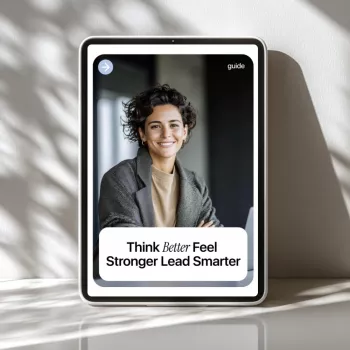
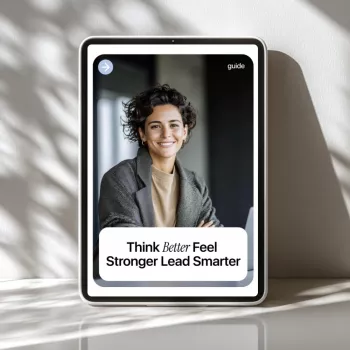
AI can support (not replace) that growth by helping with pattern spotting, reflection prompts, practice scripts, de-biasing language, and quick post-incident reviews. If you want a structured way to practice those skills, Think Better Feel Stronger Lead Smarter – A Practical Guide to Emotional Intelligence with AI Tools for Modern Leaders & Professionals provides repeatable exercises you can run against real scenarios.
This loop is simple enough to use mid-meeting and structured enough to build measurable change.
Catch the signal early: tight chest, rushed tone, urge to interrupt, mental narrowing, or the impulse to “win” instead of solve. The earlier you notice, the less cleanup you’ll need later.
Label the emotion and the underlying need. Many leadership flare-ups trace back to threatened needs like status, certainty, autonomy, fairness, or belonging. Naming the need creates options beyond the first reaction.
Decide the outcome and boundary before speaking: what must happen, what’s negotiable, and what’s not. This reduces rambling, mixed signals, and “accidental” commitments.
Use a short, structured message: facts → impact → request → next step. The structure lowers drama and increases clarity—especially in tense conversations.
Do a two-minute debrief after key moments. Track triggers, effective phrasing, and what to try next time. Weekly review is where the compounding happens.
Used well, AI functions like a rehearsal room and a mirror—helping you see patterns, test language, and explore alternatives before real stakes are on the line. For an evidence-based foundation on why EQ matters in leadership, the Harvard Business Review topic page on emotional intelligence offers a strong starting point, and Daniel Goleman’s overview remains a widely cited reference point in the field: Daniel Goleman – Emotional Intelligence.
| Moment | EQ skill | AI support | What to watch for |
|---|---|---|---|
| Giving critical feedback | Self-management + empathy | Draft a feedback script with specific examples and a clear next step | Over-softening (unclear) or over-sharpness (shame/defensiveness) |
| Conflict between teammates | Social awareness + mediation | Generate neutral questions and a shared-problem statement | Taking sides too early; ignoring power dynamics |
| Managing up under pressure | Boundary setting + influence | Rewrite an escalation message with facts, options, and recommended decision | Venting disguised as escalation; missing a clear ask |
| After a mistake | Accountability + repair | Create a repair plan and an apology that names impact and prevention | Over-explaining; shifting blame |
| Leading change | Emotional attunement | Draft a change narrative addressing fears, benefits, and what stays stable | Skipping the “why” and the human cost |
For stress-heavy weeks, consider pairing your reset routine with something physically calming—leaders often underestimate how much nervous-system regulation improves communication. A light, comfort-focused item like the Adorable Capybara Plush Pillow can be a simple cue to slow down during reviews, tough prep, or decompression after conflict.
Think Better Feel Stronger Lead Smarter – A Practical Guide to Emotional Intelligence with AI Tools for Modern Leaders & Professionals offers a structured path for strengthening emotional intelligence with modern, AI-supported exercises. A practical way to use it is to pick one leadership scenario each week, run the notice→name→choose→act→review loop, and keep a short record of what improved and what still triggers you.
Meaningful improvement can begin in a few weeks when you consistently practice micro-habits like trigger tracking, rehearsal, and short debriefs. Deeper change takes longer, but the early wins often show up as fewer reactive messages and quicker recovery after conflict.
Use AI for rehearsal and reflection: generate options, spot ambiguity or blame, and explore calmer phrasing—then rewrite in your own voice. The goal is better choice-making, not perfect “robot language.”
Avoid sharing confidential identifiers, summarize situations generically, and follow company policy on data handling. Treat AI output as a draft support tool and keep final judgment, context, and accountability with you.





Leave a comment