HomeBlogBlogOnline Business Starter Pack: 7 Steps to Your First Sale

Online Business Starter Pack: 7 Steps to Your First Sale

Online Business Starter Pack: 7 Steps to Your First Sale

Online Business Starter Pack for Beginners: A Practical Roadmap From Idea to First Sale

Starting an online business gets dramatically easier when the moving parts are organized: choosing a model, validating demand, setting up the basics, launching, and building simple systems that keep working. The goal isn’t perfection—it’s a clear path to a real first sale, followed by improvements based on real feedback.

What “starting an online business” actually involves

Most beginner frustration comes from doing steps out of order. A practical start usually includes:

  • Pick a business model that matches your available time, budget, and skills (product-based, digital products, services, affiliate, content-led).
  • Define a clear offer: who it’s for, what problem it solves, and what outcome it delivers.
  • Validate demand with lightweight research (search patterns, community questions, competitor offers, pre-sell signals).
  • Build a basic online presence: one home base (site/store) plus 1–2 traffic channels (social, email, search, marketplaces).
  • Set up operations: payments, delivery/fulfillment, customer support, simple bookkeeping, and policies.
  • Launch small with a measurable plan and improve from feedback instead of endlessly “perfecting.”

Common online business models: time, cost, and complexity

Model Upfront cost Time to first sale Best for Notes
Service (freelance/consulting) Low Fast Strong skill + limited budget Sell outcomes, not hours; package services to simplify delivery
Digital product (templates, ebooks, courses) Low–Medium Medium Creators who can teach/standardize Front-load creation; improves margins and scalability
Physical products (own inventory) Medium–High Medium Brand builders with capital Requires sourcing, shipping, returns, and storage planning
Print-on-demand / dropshipping Low–Medium Medium Testing niches quickly Focus on differentiation; manage quality and shipping expectations
Affiliate/content-led Low Slow–Medium Long-term content builders Needs consistent publishing and audience trust

A beginner-friendly 7-step roadmap

If you want a straightforward sequence that reduces overwhelm, use this as your default order of operations:

  1. Choose one niche and one promise: define the audience and the result your offer helps them get.
  2. Validate quickly: collect 10–20 real data points (search results, competitor reviews, forums, social comments, short surveys).
  3. Create the simplest version of the offer: a starter bundle, one service package, or 1–3 hero products.
  4. Build the minimum storefront: clear headline, benefits, proof, pricing, FAQs, and one call to action.
  5. Set up payments and delivery: checkout, confirmation email, fulfillment steps, and a support inbox.
  6. Launch with a short campaign: 7–14 days of consistent promotion, feedback collection, and small improvements.
  7. Systemize: repeatable weekly tasks (content, outreach, customer care) and monthly reviews (profit, traffic, conversion).

What to look for in an online business starter pack

A good starter pack doesn’t add more reading—it removes “What do I do next?” by making decisions easier and steps obvious. Look for:

  • Clear sequencing (idea → validation → setup → launch) with checklists and worksheets.
  • Decision support that narrows your choices (offer type, pricing, messaging, channels).
  • Beginner-fit templates such as a simple sales page structure, outreach scripts, a launch calendar, and tracking sheets.
  • Practical examples (sample offers, positioning statements, first-week launch actions).
  • A repeatable operating system with a basic metrics dashboard and post-launch optimization steps.

Using the starter pack without getting stuck in planning

Planning is useful until it becomes a hiding place. Keep momentum with constraints that force shipping:

  • Set a 14-day “build and ship” window: complete one section per day and publish before it feels perfect.
  • Choose one primary channel: go all-in on short-form video, long-form content, or email-first outreach—just one.
  • Track only three launch metrics: visits (or reach), conversions (sales/leads), and revenue.
  • Collect proof early: testimonials, screenshots, before/after outcomes, or customer feedback.
  • Run a simple improvement loop: weekly review → one change to the offer page → one change to traffic → repeat.

Budget, tools, and time: realistic expectations for beginners

Most first-time founders overspend on tools and underinvest in customer conversations. A more durable approach is to keep fixed costs low and put effort into a simple offer and consistent promotion.

For official guidance on business fundamentals and compliance, review the U.S. Small Business Administration’s overview of business structures, the IRS starting-a-business resources, and the FTC advertising and marketing basics.

Launch checklist: the essentials before the first promotion push

Product pick: a guided bundle to keep the setup and launch organized

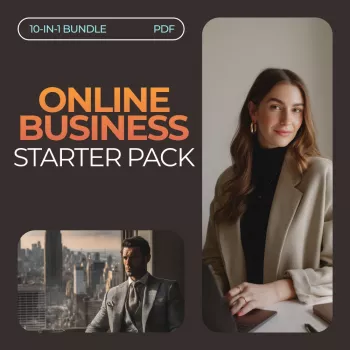
If a structured start would help you move faster, Online Business Starter Pack for Beginners: Your Complete Guide to Starting an Online Business bundles the planning and setup steps into a guided workflow. It’s designed to shorten the “what should be done next?” cycle by turning big tasks (validation, offer building, launch prep) into small, trackable actions.

To keep costs and purchases intentional while you build, Shop Smart, Save Big This Prime Day | What to Buy on Amazon Prime Day Guide | Digital Download Checklist & eBook can help you plan smarter buys for basic business needs (lighting, storage, shipping supplies, or a starter laptop setup) without impulse spending.

FAQ

How long does it take to start an online business as a beginner?

For services, it’s often possible to launch in 1–2 weeks if you package one clear offer and start outreach. For digital products and physical products, a realistic range is 2–4 weeks to publish a minimum offer, then improve after you see what customers actually respond to.

Do beginners need a website to start selling online?

No—many beginners start on marketplaces, social platforms, or a single landing page. Having a simple “home base” (even one page) helps you control your message, collect emails, and avoid rebuilding everything later.

What is the simplest online business to start with little money?

Service-based businesses are usually the simplest because you’re selling an outcome using skills you already have. Digital products can also be low-cost but require upfront creation, while affiliate/content-led paths cost little money but tend to take longer to reach consistent sales.

Was this article helpful?

Yes No
Leave a comment
Top

Yay! 10% Off Just for You!

Join our community and enjoy 10% off your first order. Subscribe for exclusive deals!

Shopping cart

×