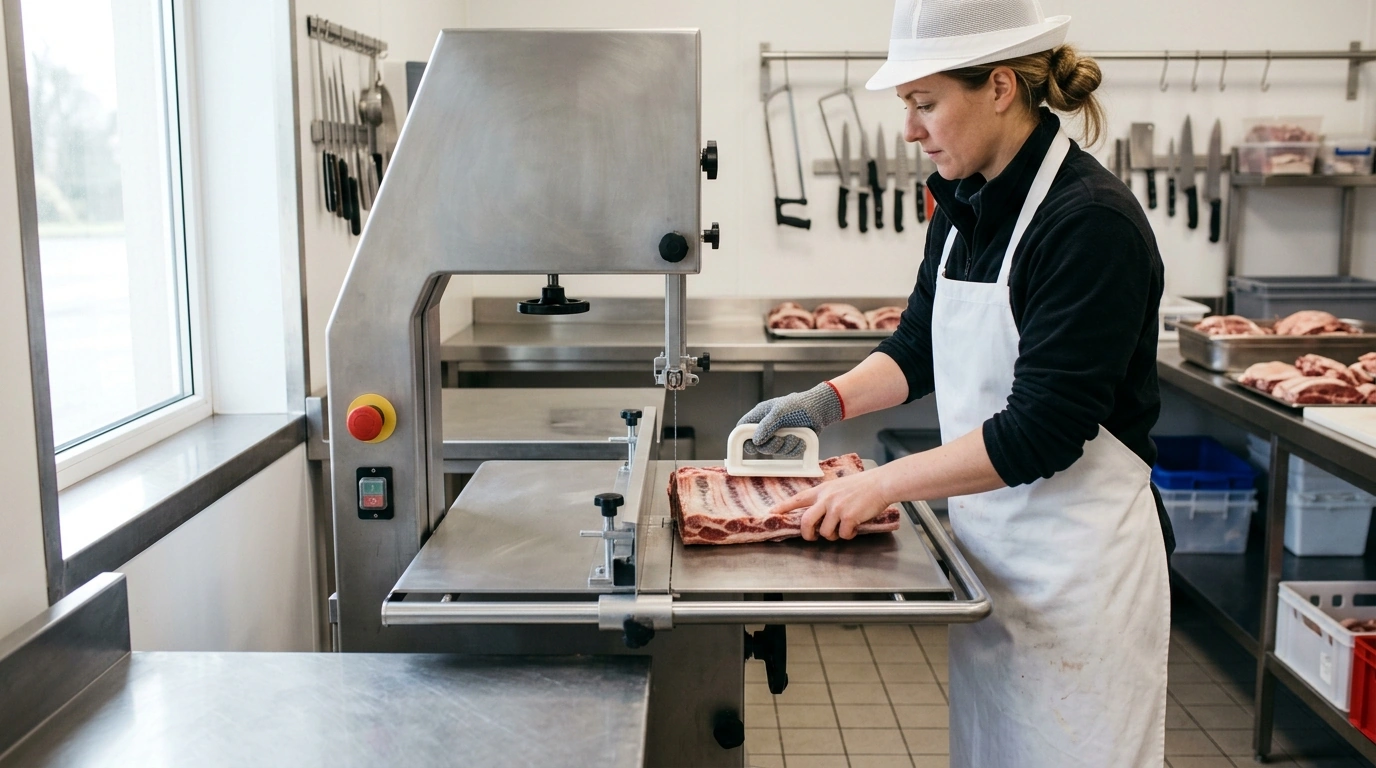
An electric bone cutting machine is built for the work that quickly overwhelms knives and cleavers: bone-in meat, ribs, dense joints, and certain chilled or semi-frozen portions. When the machine is matched to your product size and throughput, it helps standardize portioning, reduce trim loss from crooked cuts, and keep production moving with less strain on staff. The best results come from a solid setup, the right blade, consistent product temperature, and a cleaning routine that protects both food safety and the machine itself.
For day-to-day operations, consistency is often the biggest win. Uniform portions make pricing simpler, plating more predictable, and inventory counts more accurate—especially when multiple staff members rotate through the same station.
| Feature | Why it matters | What to look for |
|---|---|---|
| Cutting capacity | Prevents forcing product and improves accuracy | Enough throat width/height for the largest cuts handled |
| Blade tracking & tensioning | Reduces drift and uneven cuts | Accessible tension knob and stable tracking adjustment |
| Safety controls | Lowers risk during high-volume work | Emergency stop, blade guards, and clear on/off controls |
| Table & fence | Improves portion consistency | Rigid table, non-slip surface, and adjustable fence/guide |
| Cleanability | Supports food safety and faster turnover | Smooth surfaces, removable components, minimal crevices |
If you’re equipping a counter or prep line, start with capacity and cleanability. A machine that fits your biggest product without wrestling it into position—and that can be cleaned quickly between tasks—tends to deliver the best real-world ROI.
For workplace guidance on guarding and safe operation, review OSHA’s overview of Machinery and Machine Guarding. In food environments, safety and sanitation go hand-in-hand—safe procedures reduce panic moves and rushed handling that can create contamination risks.
A practical workflow tip: standardize your “first cut.” When every operator starts by squaring a slab against the fence and trimming a clean edge, the rest of the portions tend to stay uniform and you avoid compounding small angle errors across multiple cuts.
Sanitation programs should align with recognized standards and local rules. For additional context, the USDA FSIS references sanitation requirements under Sanitation Performance Standards (9 CFR 416), and the FDA Food Code provides widely adopted retail and foodservice guidance.
It depends on the machine’s rating, blade selection, and how hard-frozen the product is. Many units handle chilled to semi-frozen cuts well, but solid frozen blocks can strain the motor and accelerate blade wear—check manufacturer limits and use the recommended blade type.
Replace the blade when you notice dull cutting, increased drift, excessive force needed, burning/smearing, or any missing teeth or cracking. Replacement frequency varies by volume and what you cut, but damaged blades should be swapped immediately for cut quality and safety.
Unplug or lock out power first, then remove guards/components as directed by the manual. Wash and sanitize food-contact parts, avoid spraying electrical areas, allow everything to air-dry, and reassemble with guards secured before the next shift.






Leave a comment