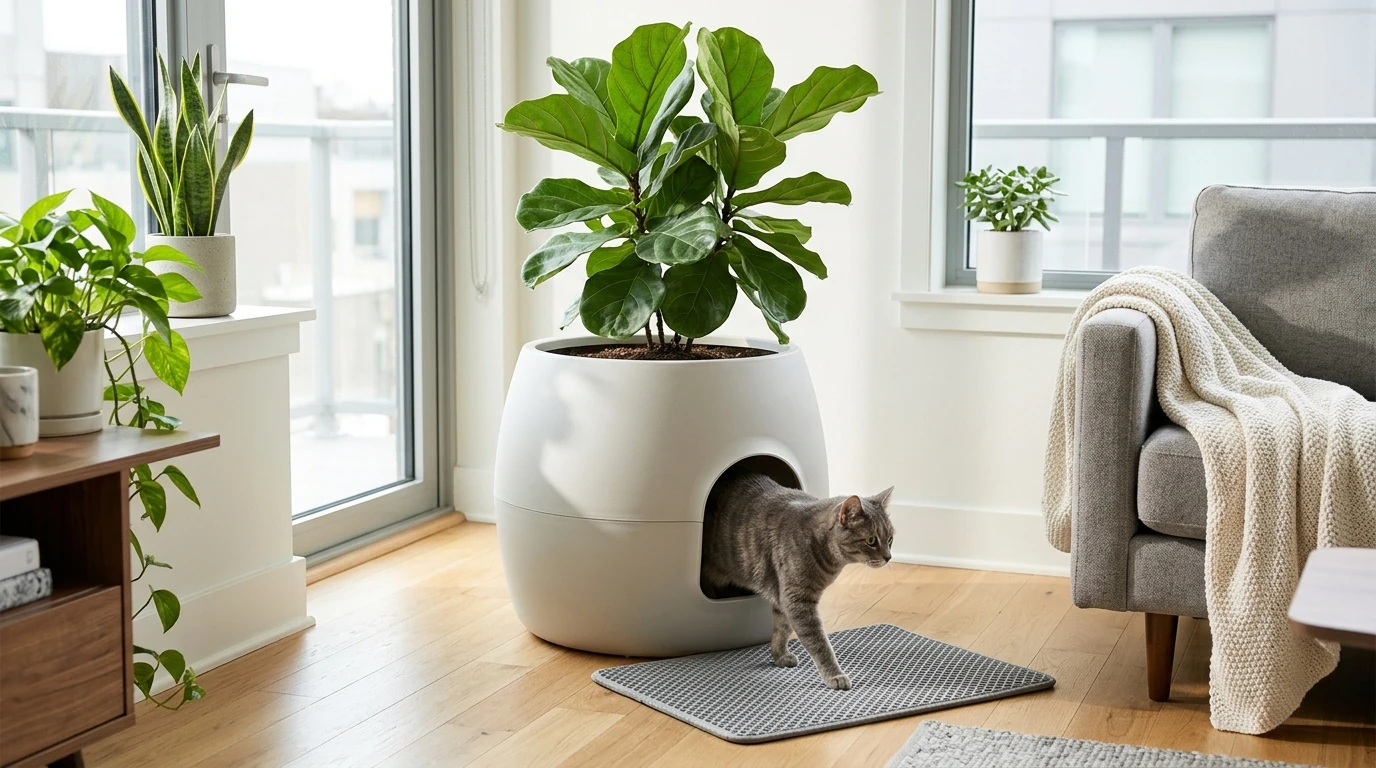
A litter box can blend into a room and still do the hard work of odor control and daily convenience. This flowerpot-inspired design pairs a clean, modern look with built-in deodorization and extra interior space, aiming to keep cats comfortable while keeping the surrounding area fresher and easier to maintain.
Traditional litter pans tend to announce themselves the moment you walk into a space. A flowerpot-style enclosure takes a different approach: it’s shaped to resemble decor, so it looks more intentional in living rooms, bedrooms, and entryways where a standard box can feel visually loud.
The enclosed profile can also help keep the litter area looking tidier by reducing the amount of litter that kicks outward during enthusiastic digging. While no enclosure eliminates tracking entirely, a more contained footprint often makes floors easier to manage—especially when paired with a mat at the exit.
Even with great litter, odor can build up in the hours between scoop sessions—particularly in smaller homes or multi-use rooms. Built-in deodorization is designed to support a fresher-smelling space during normal day-to-day life, so the box feels more “background” than “center stage.”
It’s still important to treat deodorization as support, not a substitute for cleaning. Cat care organizations consistently emphasize that litter box hygiene influences both comfort and good bathroom habits. For broader guidance on cat care basics, see resources from the American Veterinary Medical Association (AVMA) and toileting advice from International Cat Care.
Interior space matters more than many people expect. Cats naturally want to turn around, find a spot, and cover thoroughly. When a box is cramped, some cats rush, mis-aim, or avoid it altogether—issues that can look like “behavior problems” but are often simple comfort problems.
If a cat is new to enclosed boxes, space can make the transition smoother. A roomy design tends to feel less like a “trap,” especially when the entry is easy to find and the interior stays clean and dry.
Where a litter box sits can matter as much as the box itself. Cats generally prefer a predictable, calm location—easy to reach, not hidden behind obstacles, and not in a loud, high-traffic pinch point.
| Home need | Why it matters | How a flowerpot-style deodorizing box helps |
|---|---|---|
| Visible placement in a living area | The box must look tidy alongside decor | Planter-like form reduces the “pet item” look and blends in more easily |
| Odor sensitivity | Smells can spread quickly in smaller spaces | Deodorization support helps reduce lingering odor between cleanings |
| Large cat or active digger | Cats need room to turn and cover comfortably | Spacious interior supports natural movement and may reduce mess |
| Tracking and scatter | Litter can spread into nearby flooring | Enclosed design can help contain scatter; pair with a mat for best results |
| Busy schedule | Maintenance needs to be simple | Design-forward enclosure plus deodorization can make the daily routine feel more manageable |
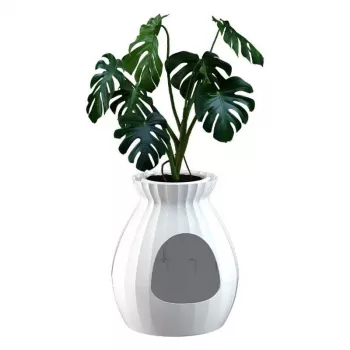
If you’re looking for a cleaner-looking setup that still prioritizes comfort, the Modern Flowerpot-Style Cat Litter Box with Smart Deodorization and Spacious Design is in stock and suited for homes where the litter box needs to live in a shared space. For best day-to-day results, pair it with consistent daily scooping and a clumping litter that matches your cat’s preferences.
To complement a cozy, decor-friendly corner near your cat’s area, consider adding a soft accent like the Adorable Capybara Plush Pillow—an easy way to make a pet zone feel intentional without adding visual clutter.
Some cats adapt quickly, while others do best with a gradual transition. Place the new box next to the old one, use familiar litter, and keep the entry clear so your cat can explore without feeling blocked in.
Scoop daily, then replace litter and wash the box on a routine based on litter type and the number of cats. Deodorization helps reduce lingering odor between cleanings, but it doesn’t replace regular maintenance.
An enclosure can reduce scatter, but tracking depends on litter type and what sticks to paws. A litter mat outside the entry and avoiding overfilling the box typically make the biggest difference.



Leave a comment