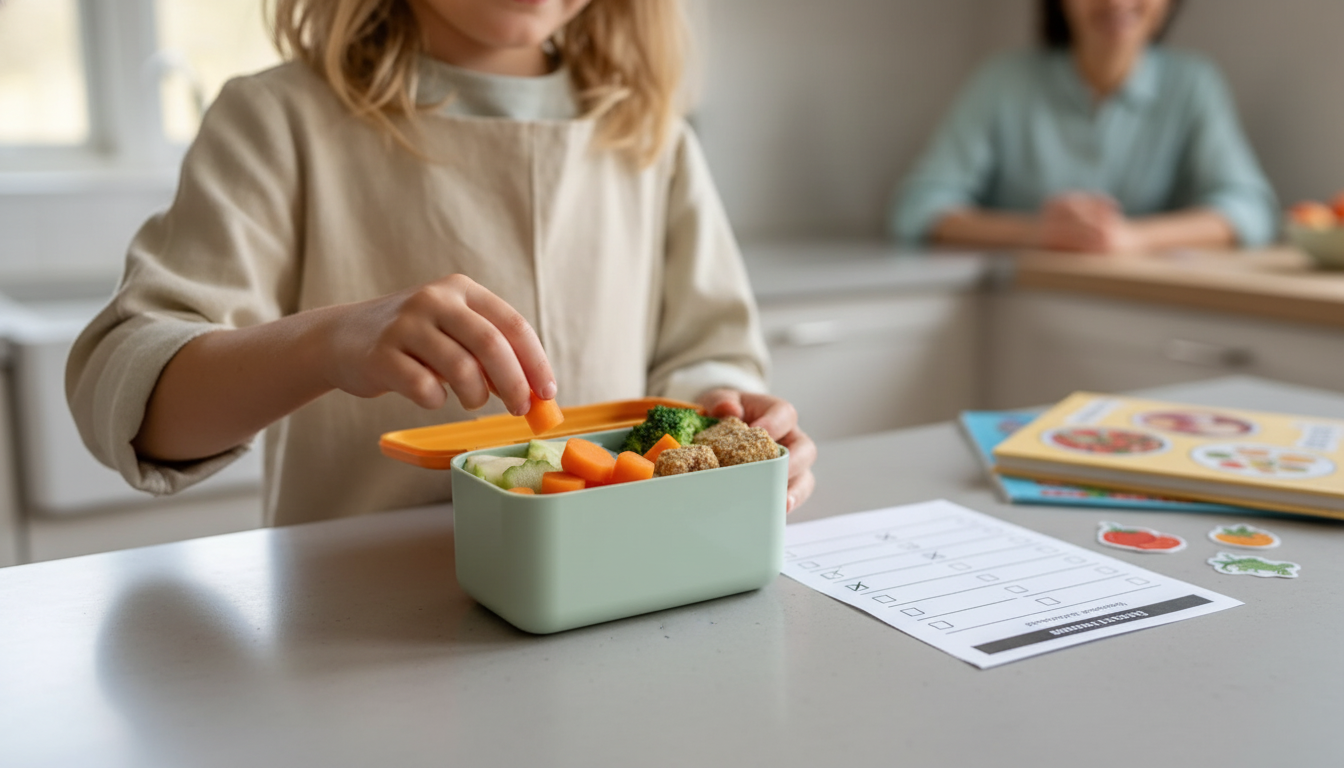
When kids share the meal-planning load, dinner stops feeling like a daily pop quiz. A simple weekly plan turns “What’s for dinner?” into a predictable routine, which lowers decision fatigue for adults and helps kids understand how food choices connect to energy, mood, and focus.
Meal planning also builds ownership. Kids are more likely to try meals they helped choose, and they learn to make decisions inside real boundaries: time, budget, nutrition needs, and what’s already in the fridge. Along the way, they pick up practical life skills—reading labels, comparing prices, following a basic cooking sequence, and cleaning up with fewer reminders.
Just as important, planning creates natural, low-pressure openings to talk about balanced eating without turning the table into a lecture. It’s easier to discuss protein, fiber, and hydration when it’s framed as “what helps your body feel steady” rather than “good foods vs. bad foods.”
Kids don’t need full control to contribute. Start with small, clear tasks that match their attention span and skills, then expand responsibility once the routine feels easy.
| Age range | Planning task | Shopping task | Kitchen task | Accountability check |
|---|---|---|---|---|
| 4–6 | Pick 1 main from 2 options; choose a fruit/veg | Find items in pantry; help count servings | Wash produce; stir; assemble simple plates | Place a checkmark when meal is served |
| 7–9 | Use a meal template (protein + veg + carb) | Help write list; cross off items at home | Measure, mix, set timers with help | Rate the meal: “Keep/Change/Retry” |
| 10–12 | Plan 1–2 dinners; choose one new idea monthly | Compare prices; select store-brand swaps | Chop with safe tools; cook one component | Pack leftovers; note what to restock |
| 13+ | Plan 3–5 meals; manage schedule conflicts | Budget cap; shop with a list; avoid duplicates | Cook a full meal; clean as you go | Review cost per meal and leftover usage |
Guardrails that prevent burnout: limit new recipes per week, rotate family favorites, and keep one “backup dinner” available (think eggs + toast, frozen dumplings + veggies, or rotisserie chicken + bagged salad). The goal is a repeatable system—not a weekly cooking project.
A family system works best when it’s short and consistent. Pick a planning day that takes 10–20 minutes and a shopping day (in-store or online). Then run the same sequence each week:
If planning tends to sprawl, set a timer and stop when it ends. Consistency beats perfection.
Kids do better with a simple visual rule than complicated nutrition math. A helpful default is the USDA MyPlate idea: build plates around produce, add protein, include a satisfying carbohydrate, and add a calcium source when possible.
To keep things positive, use “add, don’t subtract.” Before discussing limits, ask: What can we add to make this meal more filling and balanced?
Keep treats neutral by planning them on purpose (dessert night, movie snack) so they don’t quietly steer the entire meal plan. For practical, family-friendly guidance, the Academy of Nutrition and Dietetics has kid-focused basics that support a balanced approach.
Meal planning becomes a real-life skill when kids help convert ideas into a list, a budget, and a completed dinner. Keep the list category-based—produce, proteins, dairy, pantry, frozen—so kids can find items quickly and avoid duplicate buys.
For families who like having checklists ready to print and reuse, the Dog & Cat Longevity Checklist | Printable Pet Health & Wellness Guide is a good example of how a simple, visible tracker can make routines easier to maintain across a busy week.
If your household is already using digital tools for planning, the same approach can help with other logistics too. The Find Perfect Kid-Friendly Destinations with AI | Digital Family Travel Guide can be a handy add-on for families who want a repeatable way to plan trips with fewer last-minute decisions.
Set simple guardrails (include a protein, add a fruit or vegetable, choose water most of the time) and let them decide within those boundaries. Review the final plan together before shopping so you can approve swaps without taking over.
Start with 1 meal per week per child—or 1 total meal for the family—then add more once they consistently follow through. Keep at least one quick backup meal for nights when plans change.
Yes. Use structured choices, keep a neutral “safe food” available, and use simple meal ratings to build a realistic rotation of accepted meals while gradually adding new options.







Leave a comment