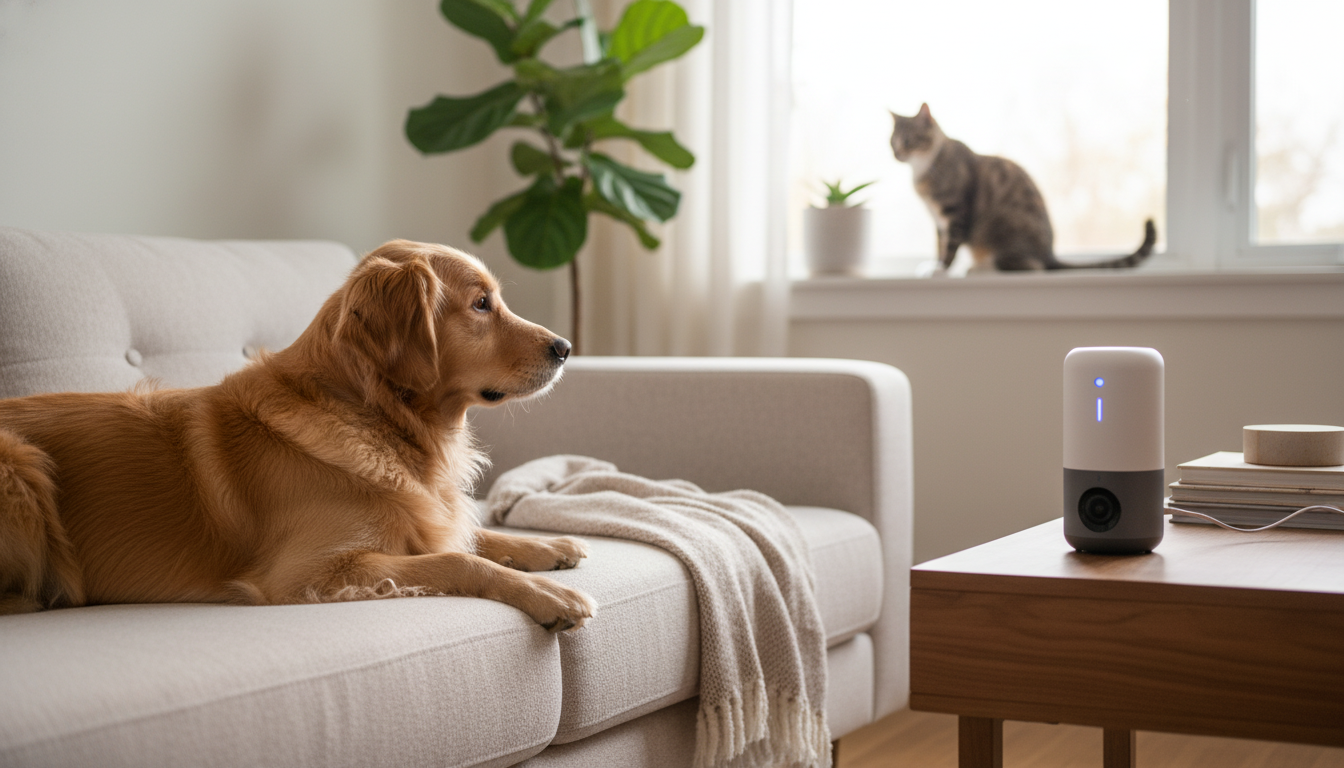
Remote pet monitoring works best when it feels calm and predictable—not like an endless stream of pings. The sweet spot is a simple setup that gives you clear visuals, a few meaningful alert types, and routines that help you spot real changes (like stress barking, getting into off-limits zones, or unusual inactivity) without obsessing over every minor movement. Smart AI features can help by filtering everyday noise and highlighting moments that actually need attention.
A baseline matters because “unusual” is personal. One dog sleeps like a rock for six hours; another rotates between naps and window-watching every 20 minutes. A few days of observation helps AI alerts become a tool—not a stress amplifier.
Start with a dependable camera and build from there. The best features are the ones you’ll actually use consistently: stable connectivity, clear video, and flexible alerts.
| Option | Best for | Pros | Watch-outs |
|---|---|---|---|
| Indoor Wi‑Fi camera with app | Quick visual check-ins | Easy setup, live view, clip playback | Wi‑Fi dropouts; placement matters |
| AI-enabled pet camera | Actionable alerts and fewer false alarms | Pet-specific detection, activity summaries | May require subscription for advanced features |
| Two-way audio device | Brief reassurance and training cues | Can interrupt unwanted behavior | Can confuse pets if used too often |
| Treat dispenser camera | Positive reinforcement and engagement | Encourages calm check-ins | Not ideal for pets with diet restrictions or resource guarding |
| Environmental sensors (temp/humidity) | Comfort and safety monitoring | Early warning for overheating/cold rooms | Separate device/app; needs calibration |
For general pet care and safety references, these resources can support decision-making alongside professional guidance: AVMA Pet Care and ASPCA Pet Care.
If you want a structured walkthrough to set rules, zones, and check-in routines without overcomplicating it, consider How to Monitor Your Pets Remotely – Smart AI Pet Monitoring Guide for Busy Pet Owners, Learn how to monitor pets remotely with Confidence. For ongoing wellness tracking that pairs well with what you see on camera, Dog & Cat Longevity Checklist | Printable Pet Health & Wellness Guide | How Long Do Dogs and Cats Live | Digital Download for Pet Owners helps you keep health notes organized and spot trends worth discussing with your vet.
For many adult pets, a few short check-ins (for example, mid-morning, lunch, and mid-afternoon) are enough. Increase frequency for puppies, seniors, or pets with medical/behavior needs, but avoid constant monitoring if it raises your own stress or disrupts your pet’s ability to settle.
They can be very useful, but reliability depends on placement, lighting, Wi‑Fi stability, and how well zones and sensitivity are tuned. Expect a short “training period” of a few days to reduce false alerts from shadows, curtains, TV sound, or busy hallway traffic.
It’s generally safe when used briefly, but some pets calm down while others get more worked up looking for you. Start with short, neutral cues and observe whether your pet settles afterward; if agitation increases, rely more on routines and enrichment than voice interaction.





Leave a comment