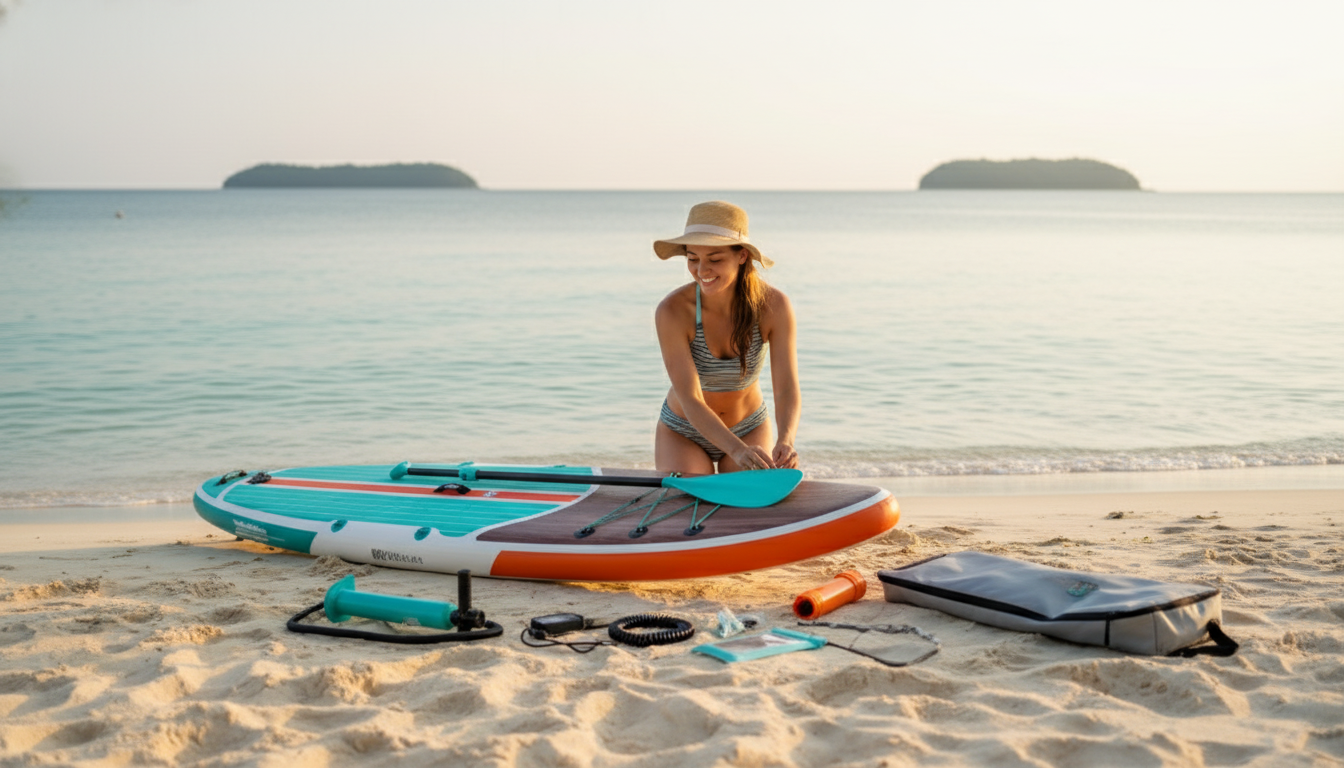
A 10’6” inflatable stand up paddle board is a versatile choice for calm lakes, slow rivers, and coastal cruising. With the right accessories included, setup is faster, transport is simpler, and getting on the water takes fewer extra purchases.
A 10’6” all-around inflatable SUP is designed to feel stable without being sluggish, making it a practical “one board for many days” option.
Accessory kits vary by brand, so it helps to confirm the “small details” that affect real-world use—especially fin attachment, pump performance, and how comfortable the bag is on longer walks to the launch.
| Accessory | What to confirm | Why it matters |
|---|---|---|
| Pump | Gauge readability and hose connection | Helps reach the right firmness for stability and glide |
| Paddle | Adjustable length range and lock mechanism | Improves comfort and reduces shoulder fatigue |
| Fin(s) | Attachment style and tight fit | Aids tracking and reduces side-to-side wobble |
| Leash | Secure cuff and strong coil/straight section | Helps keep the board within reach after a fall |
| Bag | Fits board + accessories comfortably | Makes transport and storage more practical |
| Repair kit | Patch and valve tool (if included) | Useful for small punctures or valve tightening |
Not all 10’6” inflatables feel the same. Construction, width, and fin design can make one board feel planted and efficient while another feels soft or twitchy.
A smoother setup routine saves energy before you even start paddling. The goal is consistent pressure, secure fins, and a quick gear check that prevents “back to the car” moments.
| Feature | What to look for | Why it matters | Notes for a 10’6” all-around |
|---|---|---|---|
| Length | 10’–11′ range for versatility | Balances stability and maneuverability | 10’6” is a common do-it-most length |
| Width | Wider for beginners | More lateral stability | Great for learning and casual cruising |
| Fin setup | Secure fit, easy install | Straighter tracking and control | Helpful in wind and light chop |
| Deck pad | Comfort + grip | Confidence and safer footwork | Important for beginners and longer sessions |
| Accessories | Pump, paddle, leash, bag, repair kit | Fewer extra purchases | Bundle quality impacts overall value |
Even on calm water, small choices—wind checks, proper flotation, and staying visible—make a big difference. For official guidance, review the U.S. Coast Guard’s resources on life jackets (PFDs), check conditions via NOAA forecasts, and explore skill-building tips from the American Canoe Association.
Most boards take about 5–12 minutes with a good manual pump, depending on your pace and the target PSI. Electric pumps can reduce effort and often land in a similar time window, and short breaks while pumping are normal—higher pressure generally improves stiffness on the water.
Choose a capacity that comfortably exceeds your body weight so there’s room for a paddle, water, a small cooler or dry bag, and any passenger. Staying under the stated limit typically improves stability, glide, and how secure the board feels in chop.
Yes—both are strongly recommended for beginners, and a PFD may be required depending on your location and conditions. A leash helps keep the board close after a fall, which matters because the board is also your largest source of flotation.





Leave a comment