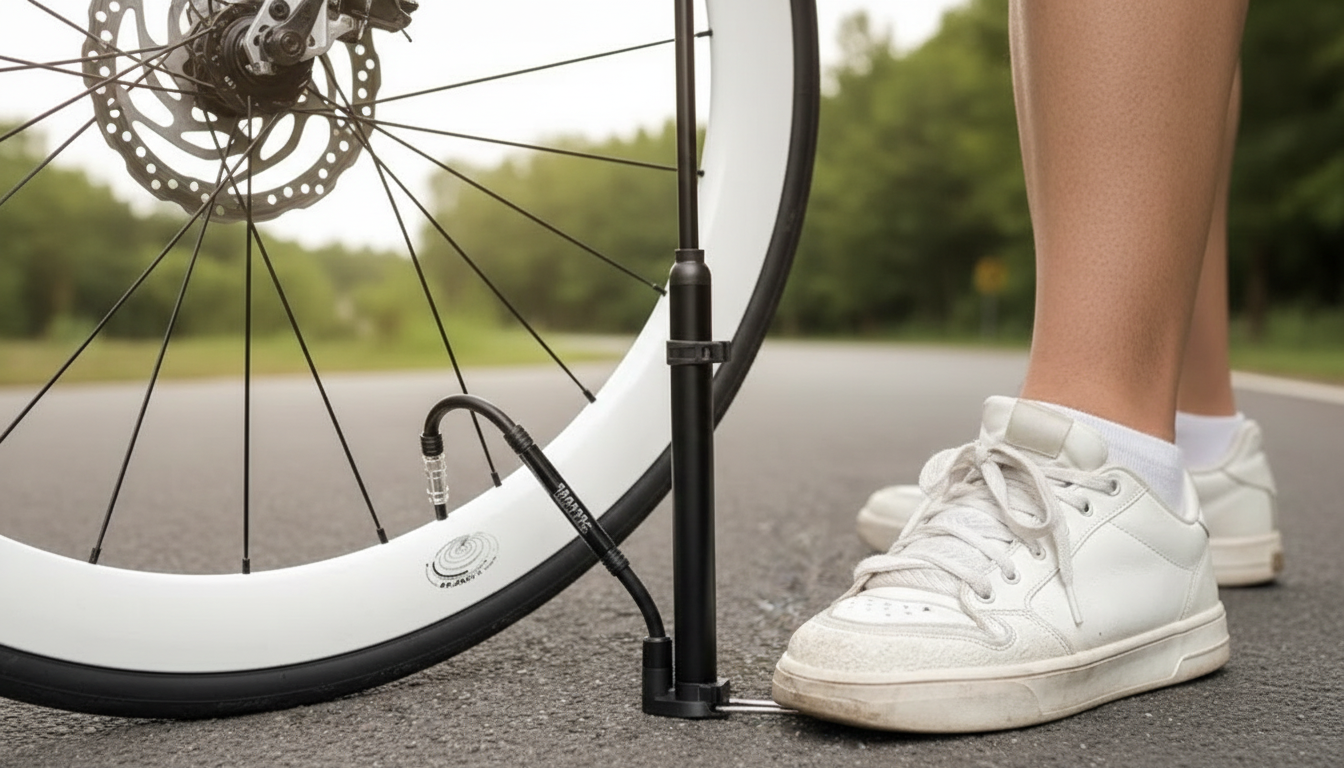
A compact bike pump earns its spot in your kit when it’s simple to carry, fast enough to get you rolling again, and compatible with the valve on your wheel. If you ride more than one bike (or share bikes at home), dual-valve support can eliminate the adapter shuffle. And when a pump lives in a backpack, pannier, or frame bag, an aluminum alloy body can make a real difference in how well it holds up over time. Below is a practical guide to choosing and using a portable high-pressure pump—especially one rated up to 120 PSI. For more guidance, see Mini Electric Bike Pump 120 PSI – Portable Tire Inflator ….
Portable pumps are all about tradeoffs: they’re lighter and smaller than a floor pump, but they need smart design to inflate efficiently. A strong compact pump should handle the essentials without becoming a chore on the shoulder of the road. For further reading, see Mini Electric Bike Pump 120PSI with Pressure Gauge, Auto ….
Valve compatibility is the first make-or-break detail. Presta valves are narrow and common on road bikes, gravel bikes, and many performance wheels. Schrader valves are wider, common on many mountain bikes, hybrids, and kids’ bikes, and look like car tire valves. A dual-valve pump helps when you ride different bikes—or when you’re the one everyone turns to on a group ride.
Before inflating, take a second to confirm the valve is ready and the pump head is fully seated. Small mistakes (like trying to pump a closed Presta valve) can waste time and cause frustrating leaks.
| Valve type | Where it’s common | Pre-inflation step | Common mistake |
|---|---|---|---|
| Presta | Road, gravel, many high-end MTB wheels | Unscrew the small top nut (and press briefly to confirm it’s open) | Trying to pump with the valve closed or not fully seated |
| Schrader | Many MTB, hybrid, kids’ bikes | Remove cap; no opening step required | Loose connection causing air loss at the head |
For a deeper valve overview with clear visuals, Park Tool’s repair help resources are a solid reference: Park Tool: Repair Help.
Portable pumps get tossed into bags, knocked around in tool rolls, and exposed to grit and moisture. That’s where an aluminum alloy body can be a practical advantage.
A 120 PSI maximum rating doesn’t mean every rider needs 120 PSI—it means the pump has enough headroom for higher-pressure situations. That can be especially helpful for narrower tires, roadside “get me home” refills, or topping off after a tube swap.
Available here: Portable 120PSI Bicycle Pump for Schrader & Presta Valves – Aluminum Alloy
Many dual-valve pumps use a reversible internal piece, dual ports, or a built-in selector to switch between Schrader and Presta. Whichever design it uses, fully seating the head straight on the valve is the key step to prevent leaks and wasted strokes.
No—many wider tires for mountain and comfort-focused riding run well below 120 PSI. A higher maximum is most useful for road tires, firmer top-offs, and situations where you need extra capacity to restore a tire quickly after a flat.
Make sure the head is pushed on squarely and held steady during pumping, then remove it straight off with a quick, clean motion. Close the Presta valve nut right away; a brief hiss during removal can be normal, but it should be momentary.






Leave a comment