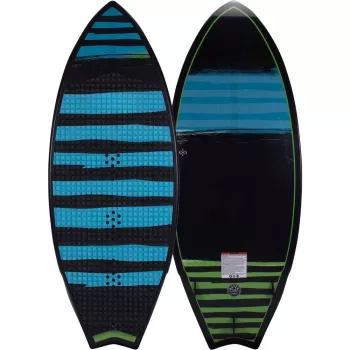
A progression-friendly wakesurf board should feel stable while learning the basics, then stay lively enough to keep improving. This 5’4” option is positioned as an all-around board for new riders building confidence and intermediates dialing in cleaner turns, better speed control, and more consistent rides on the wave. The goal is simple: fewer shaky recoveries, more time in the pocket, and a board feel that doesn’t punish small mistakes.
Versatility isn’t about being perfect at one thing—it’s about being dependable across typical conditions and multiple skill levels. A truly usable “one board” setup usually comes down to these on-water traits:
Boat waves change from crew to crew and from set to set, so a versatile board should feel consistent even when the pocket length, push, or steepness shifts slightly.
For many riders, 5’4” is a “middle ground” length that helps reduce the learning curve without feeling like a long, sluggish plank once turns and speed management become the focus.
Length alone doesn’t define how a board rides, but in the 5’4” class, many boards tend to deliver a calmer feel during starts and quick recoveries. That matters when stance and balance are still developing, and it can also reduce fatigue—less “micro-correction” means longer, more productive sets.
At the same time, outline and nose/tail shaping influence how easily the board initiates turns versus how locked-in it feels while tracking. For intermediates, the sweet spot is stability without losing the ability to redirect quickly when the wave steepens or flattens.
| Feature | On-water feel | Why it matters for progression |
|---|---|---|
| Mid-length (5’4” class) | More composed at lower speeds | Helps new riders stay up and intermediates stay in the pocket |
| Wider, more stable platform (typical in versatile boards) | Less wobble underfoot | Makes stance changes and weight shifts easier to learn |
| More responsive tail/outline (common on all-around shapes) | Quicker direction changes | Supports carving practice and speed control |
| Efficient glide | Easier to maintain wave connection | Reduces reliance on aggressive pumping |
A board can be “right,” but setup and habits decide how quickly things click. Start with fundamentals that keep rides calm and repeatable:
For general on-water safety guidance—especially life jacket use and safe operation—review the U.S. Coast Guard boating safety resources. Many riders also reference the WSIA for wake sports education and safety standards.
Often, yes—mid-length boards commonly feel more stable and predictable during starts and early rides. The best fit still depends on rider size, the boat’s wave, and how confident you feel balancing as the speed changes.
First, build steady speed close to the pocket, then bring the handle to your hip and gently let go (don’t toss it). Keep your weight centered, look forward, and use small, calm pumps to move back toward the sweet spot when you drift.
Beginner boards usually emphasize forgiveness and stability, while intermediate boards tend to feel quicker and more responsive for carving and speed control. A versatile board blends both so it can feel steady early on and still support progression as technique improves.






Leave a comment