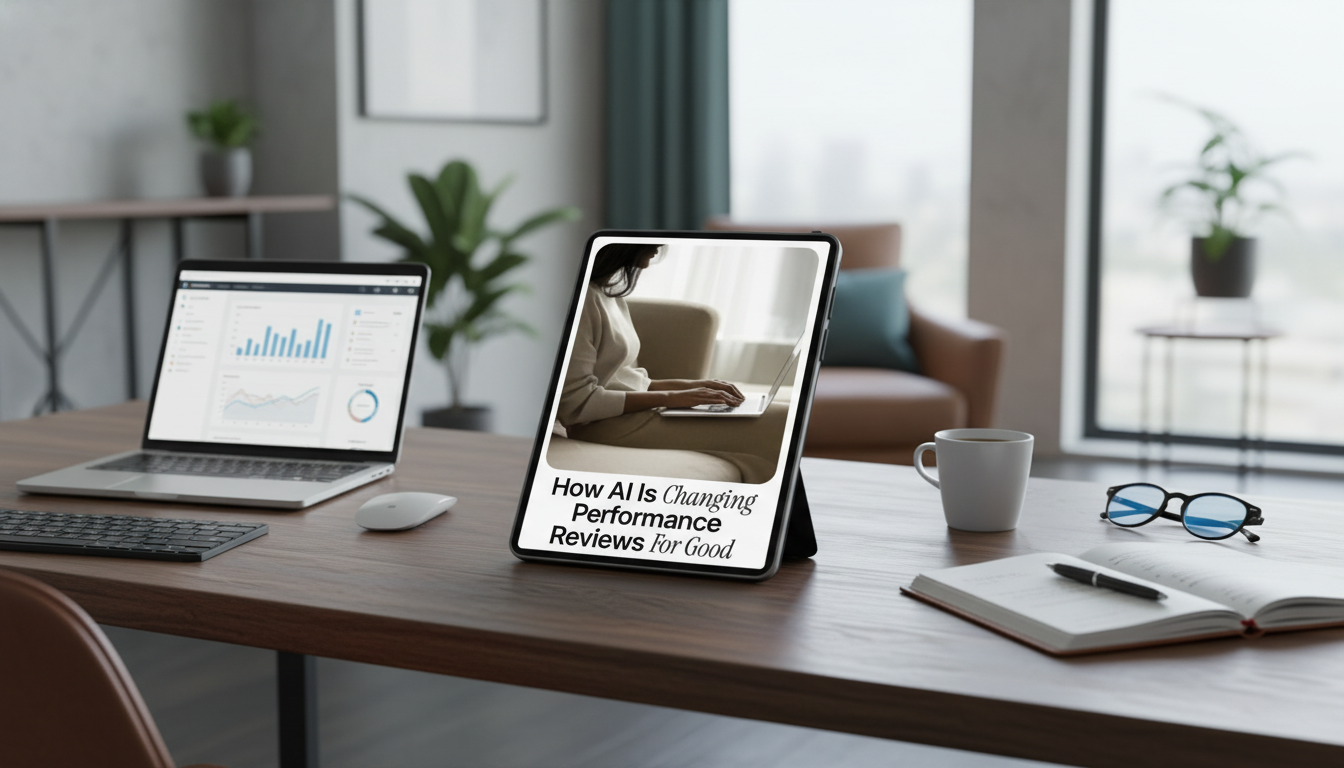
Performance reviews are shifting from once-a-year, opinion-heavy conversations to continuous, evidence-informed coaching. AI can reduce admin work, surface patterns across feedback, and improve consistency—when it’s used with clear guardrails. This guide breaks down what changes, what should never be automated, and how to adopt AI in a way that supports fairness, clarity, and better manager-employee conversations.
Modern review cycles are becoming lighter, more frequent, and more focused on outcomes. Instead of saving everything for an annual rating, teams are leaning on regular check-ins, goal updates, and short coaching moments that keep expectations clear.
Hybrid and remote work also raise the odds of “visibility bias.” When someone’s impact is less observable day-to-day, documented outcomes, structured peer input, and consistent rubrics matter more than ever. At the same time, managers are under time pressure to deliver thoughtful reviews, while HR teams are under pressure to maintain consistency, reduce risk, and ensure compliant documentation.
A practical north star: AI should improve the quality of decisions and conversations, not replace them. Used well, it helps managers show their work—connecting feedback directly to evidence—while keeping humans accountable for context and final calls.
AI is strongest when it acts like a careful assistant: organizing inputs, spotting gaps, and proposing drafts that a manager can refine. It can quickly summarize peer feedback and 1:1 notes into themes, pull representative examples, and flag places where feedback lacks specifics (for example, “great communicator” with no observable behavior attached).
It can also detect inconsistencies in language across teams—such as more hedging words, fewer leadership adjectives, or less credit for impact in feedback given to certain groups. That’s useful as a warning signal, not as a final verdict.
What AI should not do: make final compensation or promotion decisions without human review and a documented rationale, or evaluate “potential” based on vague signals that can encode bias. Rule of thumb: use AI for drafting, organizing, and highlighting risks—keep humans responsible for judgments and outcomes.
| Step | Traditional approach | AI-enabled approach | Human responsibility that remains |
|---|---|---|---|
| Collect inputs | Manager memory + scattered notes | Centralized notes + AI-assisted summaries | Verify accuracy; ensure representation of the full period |
| Write review narrative | Blank-page writing; inconsistent structure | Draft generated from evidence and competencies | Edit for context, tone, and specificity; add missing outcomes |
| Calibrate across team | Subjective comparisons; limited data | AI flags outliers, missing evidence, and language patterns | Make final calls; document business rationale |
| Deliver feedback | One-time meeting; variable follow-up | Suggested talking points + follow-up plan | Coach, listen, agree on goals; confirm understanding |
AI can support nearly every stage of the cycle without turning the process into a black box. Before the cycle begins, it can help HR create role-specific competency rubrics and example behaviors, then generate consistent forms and prompts across teams. During the cycle, AI can turn weekly updates and project notes into an “accomplishment log” that employees can validate—reducing recency bias.
For feedback collection, AI can cluster peer feedback by theme (collaboration, execution, communication) and pull representative quotes that show patterns without burying managers in raw comments. During drafting, it can convert evidence into a structured narrative (impact, scope, results, behaviors) and suggest development goals tied to observable next steps.
In calibration, AI can flag reviews that have weak evidence, overly generic language, or extreme ratings that don’t align with goal attainment. After the cycle, it can produce a coaching plan with milestones, resources, and check-in questions for the next quarter—giving managers a concrete follow-through path instead of a “see you next year” ending.
For compliance-aligned guidance, review the NIST AI Risk Management Framework (AI RMF 1.0) and the OECD AI Principles. For employment-related risk awareness, the EEOC provides guidance relevant to adverse impact and workplace decision systems.
For teams that want a deeper, manager-friendly walkthrough, see How AI Is Changing Performance Reviews for Good – Practical Guide on the ai role in performance reviews for Modern Managers & HR Teams.
If you support performance cycles in a public-sector context (where documentation, transparency, and process consistency are especially critical), AI in Government Services Guide | Practical AI in Government Services for Public Sector Innovation, Automation & Smart Decision-Making can help align adoption with governance expectations.
No. AI can draft, summarize, and flag inconsistencies, but managers must own judgment, context, and final decisions—especially for pay, promotion, and performance actions.
Use evidence-based drafting, consistent rubrics, and language-pattern checks, then audit for consistency across teams and (where lawful/appropriate) across demographic groups. Keep humans accountable by requiring traceable rationale for ratings and decisions.
Exclude sensitive personal data (including medical details), protected-class inferences, rumors or unverified hearsay, security-sensitive information, and anything not approved by policy. Data minimization and secure, approved tooling reduce risk and protect employee trust.






Leave a comment