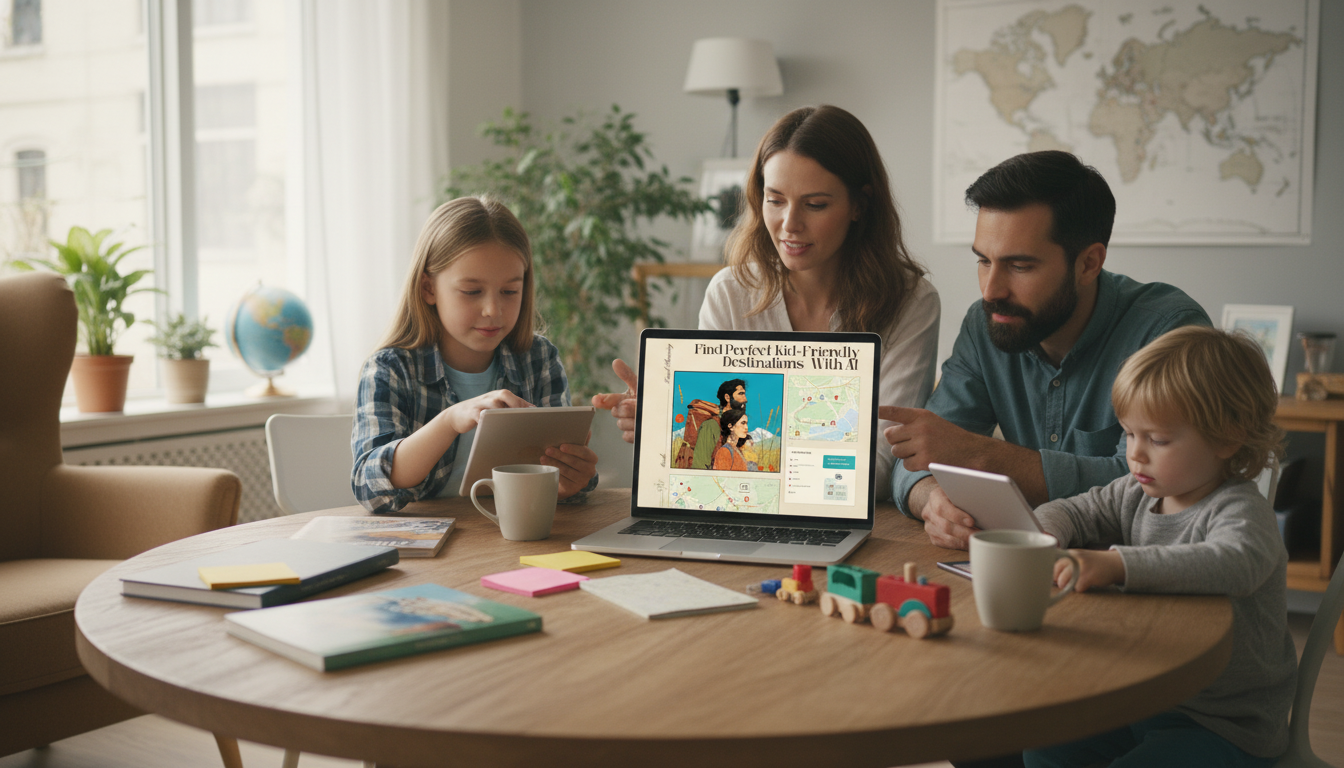
Family trip planning gets easier when AI helps narrow options, flag practical constraints, and turn scattered ideas into a clear shortlist. The key is giving AI the right “family context” so it can recommend places that fit real-life nap windows, stroller logistics, food routines, and parent comfort levels—without spending hours bouncing between tabs.
“Kid-friendly” isn’t a label—it’s a match between your kids’ needs and a destination’s day-to-day livability. Before asking for recommendations, define the basics so the suggestions don’t drift into generic lists.
This upfront clarity is what helps AI propose destinations that work at 2:00 p.m. (when everyone’s tired) instead of only sounding great at 10:00 a.m.
Use AI like a planning assistant: first to organize constraints, then to compare options, and finally to draft a flexible plan you can verify.
| Factor | What to check | Why it matters |
|---|---|---|
| Flight + airport friction | Total travel time, layovers, arrival time, airport transfers | Long, late arrivals often cause day-1 meltdowns and lost sleep |
| Stroller-friendly mobility | Sidewalks, elevators, public transit access, hills | Prevents over-planning and reduces daily fatigue |
| Food flexibility | Grocery stores, kid staples, early dining hours, allergies | Avoids hunger spirals and rushed meal decisions |
| Weather + indoor backups | Heat index, rain likelihood, museums/play spaces | Keeps plans stable when outdoor time isn’t possible |
| Medical access | Clinics, pharmacies, pediatric care availability | Peace of mind for common travel illnesses/injuries |
| Sleep support | Quiet neighborhoods, room layout, blackout options | Better sleep improves everyone’s mood and itinerary success |
Specific questions get specific outputs. When you ask for “best places,” AI tends to give tourist-heavy lists. When you ask for constraints-first travel, it starts acting like a family logistics planner.
For airport planning with kids, it also helps to review TSA — Traveling with Children so screening expectations don’t add stress on departure day.
If you want a structured framework you can reuse for every trip, start with a purpose-built guide instead of reinventing your process each time. The Find Perfect Kid-Friendly Destinations with AI | Digital Family Travel Guide walks through defining your travel profile, filtering destinations, and building a plan that matches real energy levels.
To make travel days and vacation nights smoother, it also helps to simplify food decisions at home and on the road. Delegating Meal Planning to Kids | Printable Family Guide, eBook & Checklist supports routines that translate well to travel (predictable breakfasts, kid-approved staples, and fewer mealtime negotiations).
For quiet downtime on flights or during midday resets, a low-mess activity can be a lifesaver. Consider packing something like the Easter Themed Art Coloring Book for Adults & Teens for shared coloring time (especially useful when you need a calm indoor backup).
Give AI a detailed family travel profile (ages, max flight time, nap needs, budget, stroller/transit preferences) and require each suggestion to justify itself using those constraints. Then ask for a comparison table and neighborhood-level “where to stay” guidance for your top picks.
Confirm entry requirements, health guidance, and advisories with official sources, then verify attraction hours and closure days on the attraction’s own site. Check real transit times in a maps app and confirm lodging essentials like elevators, cribs, and quiet-room options directly with the property.
Plan one main activity per day, add playground/free-play time, and schedule a midday reset that protects naps or quiet time. Keep two indoor backup options ready so bad weather or low energy doesn’t derail the day.





Leave a comment