Confident presentations are built through structured practice, clear feedback, and repeatable routines. AI tools can accelerate that cycle by helping refine structure, tighten language, rehearse delivery, and reduce anxiety triggers—without waiting for a coach or a live audience. Used well, AI doesn’t replace real speaking time; it makes each rehearsal more targeted, so the next run is measurably better than the last.
Below is a practical workflow for using AI before, during, and after practice sessions so speeches sound more natural, more organized, and more audience-ready—whether you’re prepping for a meeting update, a pitch, or a high-stakes keynote.
For foundational speaking fundamentals (posture, eye contact, vocal variety), a steady reference point helps; Toastmasters maintains a useful collection of practical tips at Toastmasters International – Public Speaking Tips. For understanding the “why” behind nerves and stress responses, see the overviews from the American Psychological Association and the National Institute of Mental Health.
| Practice round | What to record | What to ask AI | What to change next |
|---|---|---|---|
| Round 1 (baseline) | Audio + quick notes on nerves and clarity | Find the main idea, confusing spots, and filler patterns | Fix structure and remove 10–20% of words |
| Round 2 (clarity) | Transcript or rough outline + timing | Rewrite transitions and simplify technical sections | Add signposts and a stronger example or story |
| Round 3 (delivery) | Audio focusing on pacing and emphasis | Mark monotone sections; suggest emphasis cues | Add pauses, vary sentence length, reduce fillers |
| Round 4 (audience) | Q&A list + objections you expect | Generate tough questions and concise answers | Prepare 3 bridging phrases and one calm closing line |
To keep it human, pick one version and personalize it with a detail only you would say: a specific moment, a small failure, a quick observation from your work. The goal is not a clever hook; it’s an opening that makes the audience relax because they understand where you’re going.
A quick test for structure: if someone asked what you said in the elevator afterward, could they repeat it in one sentence? If not, ask AI to compress your message into one line, then rebuild your three supporting points around that line.
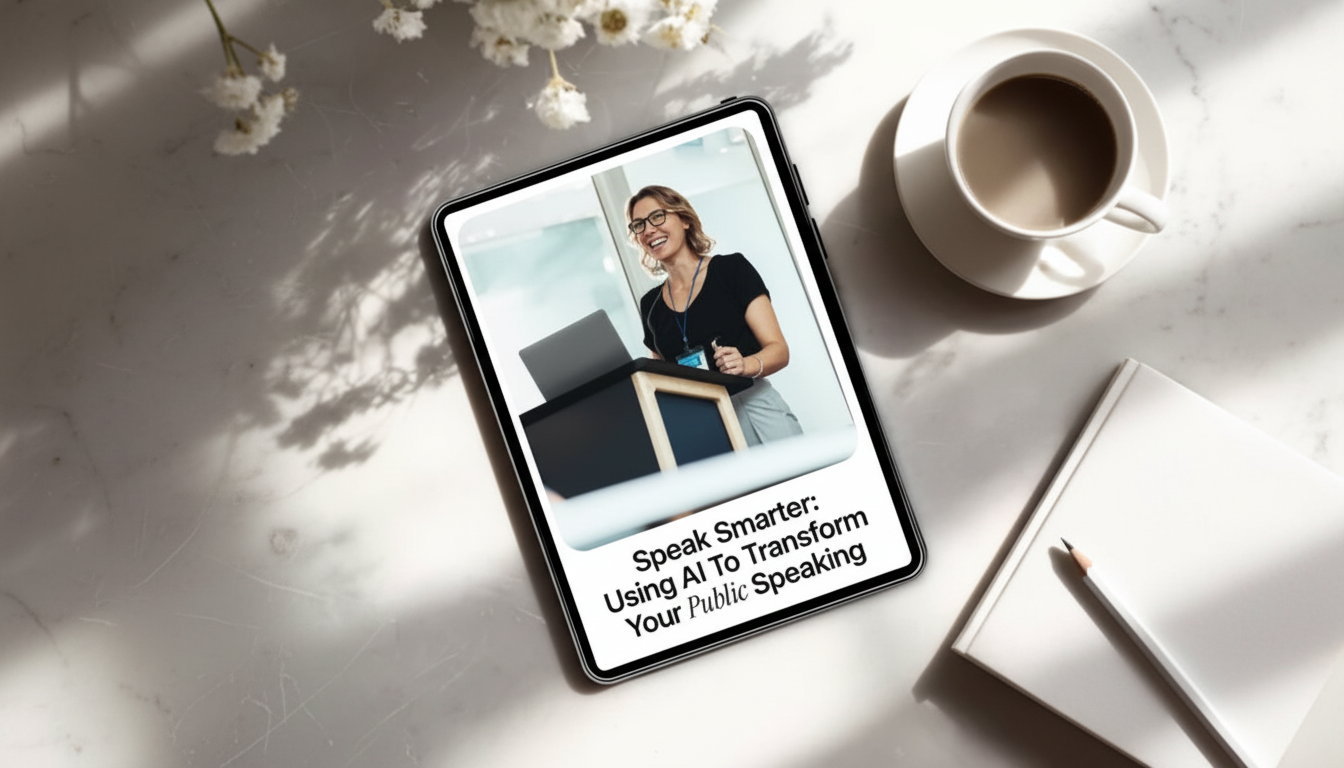
If you want a ready-to-use system you can follow session by session, see Speak Smarter: Using AI to Transform Your Public Speaking (digital download). For a separate, practical planning checklist geared toward big deal days and time-boxed prep, Shop Smart, Save Big This Prime Day (digital download guide) is also available.
Not if you anchor the draft in your own voice and rehearse from a speaking outline rather than reading a full script. Choose one strong structure, then edit phrases to match how you actually talk, and keep only the lines that feel natural when spoken out loud.
Share non-sensitive material whenever possible: your outline, anonymized examples, timing notes, and a transcript or summary of what you said. Avoid confidential details, private customer data, or internal numbers that shouldn’t leave your environment.
Clarity and structure often improve within a few sessions because you can revise quickly and get targeted feedback. Delivery habits (pace, fillers, and vocal variety) usually change over weeks, especially when you track one metric per practice and keep the routine consistent.







Leave a comment