
Self-empathy is a skill that can be practiced—especially in moments when inner criticism is loud and emotions feel tangled. With the right boundaries, AI can support a steadier self-compassion routine by helping name feelings, reflect on needs, and create kinder self-talk. The goal isn’t to hand your emotions over to a tool; it’s to use structured reflection to reconnect with your own wisdom, values, and next best step.
Mindfulness and self-compassion research suggest that learning to notice experience without harsh judgment can reduce distress and improve resilience over time. For deeper reading, the American Psychological Association (APA) overview of mindfulness and Kristin Neff’s self-compassion research are strong starting points.
In real life, self-empathy can look small and unglamorous: pausing before firing off a defensive text, admitting you’re overstimulated, or choosing “good enough” dinner because your nervous system needs rest more than perfection.
A helpful way to think about it: AI can hold a flashlight while you look inward, but it shouldn’t become the authority on your inner life. If the conversation starts to feel pressuring, shaming, or overly certain, that’s a cue to pause and return to your own grounding practices.
This routine is designed for the moments when you feel emotionally “spiky” and need gentle structure. Set a timer if that helps you avoid spiraling.
Describe what happened in neutral, observable language. Aim for “camera facts,” not interpretation. This reduces the intensity that comes from adding meaning too quickly.
Ask for emotion words and intensity levels, then choose what truly matches. Specificity helps: “hurt” and “embarrassed” feel different than “bad,” and they often need different care.
Consider needs like sleep, safety, belonging, respect, clarity, boundaries, rest, movement, and connection. Needs-based reflection shifts the frame from “What’s wrong with me?” to “What’s happening in me?”
Rewrite the inner monologue into a kinder, truthful version. The aim is warmth plus accountability—without shame.
| Step | What to write | What to look for |
|---|---|---|
| Describe | “Here’s what happened, only the facts: …” | Reduced storytelling; clearer trigger identification |
| Feelings | “Help me name what I’m feeling and rate each 0–10: …” | More precise emotional vocabulary; less overwhelm |
| Needs | “What unmet needs might be present? Give 5 options.” | Needs-based framing instead of self-blame |
| Compassionate reframe | “Rewrite my self-talk into a kind, realistic message.” | Warmth + accountability without shame |
| Next step | “Suggest 3 small actions that fit my energy level.” | Actions that are specific, time-bound, and gentle |
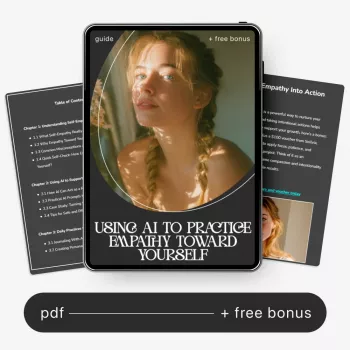
If a ready-made framework would help you stay consistent, Using AI to Practice Empathy Toward Yourself – Self-Compassion AI Guide (digital download) is designed to support self-empathy skills through guided exercises, journaling structure, and mindful reframing. It works well on a tablet or laptop, or printed for offline reflection.
To support the “small next step” part of the routine, some people also pair journaling with a comforting sensory anchor or gentle movement. If that sounds supportive, consider a cozy reset item like the Adorable Capybara Plush Pillow for decompression, or an easy movement cue like slipping on the Nike Women’s Fuchsia Slip-On Lace-Up Sneakers for a short walk when your body needs discharge more than analysis.
It can be safe and helpful for reflection and skills practice when you avoid sharing identifying details and set clear stop rules for rumination. It is not a substitute for professional care, and if you’re in crisis or at risk of self-harm, seek immediate local emergency help or a crisis line.
Supportive responses validate feelings, help name needs, and offer balanced reframes that reduce shame without denying responsibility. The tone should avoid absolute or judgmental language and end with gentle, specific next steps you can actually do.
A brief daily check-in (5–10 minutes) plus a weekly review is often enough to notice shifts. Look for quicker recovery after tough moments, less intense self-criticism, and more clarity about needs and boundaries.






Leave a comment