
A calm home is less about perfection and more about repeatable routines that reduce mental load. When the basics run on autopilot—where keys go, how the sink gets reset, what “done” looks like—your brain spends less energy managing clutter and more energy on what matters. The goal is a home rhythm that feels lighter to live in, built from small resets that take minutes and still count on low-energy days.
Home routines aren’t just chores with better branding—they’re decision-savers. Each small system you set up removes dozens of daily micro-choices (and the stress that comes with them).
For broader mental health support and coping strategies beyond the home environment, the National Institute of Mental Health (NIMH) and the American Psychological Association offer practical, evidence-based guidance on stress and wellbeing.
Overhauls are fragile because they depend on motivation. Anchors work because they attach to moments that already happen.
| Anchor moment | 2–5 minute routine | Why it helps |
|---|---|---|
| Morning start | Open curtains + make bed | Signals a fresh start and creates quick visual order |
| Leaving the house | Return keys/wallet to one drop zone | Prevents frantic searching and late starts |
| After meals | Reset sink + wipe counter | Stops buildup and lowers background stress |
| Before bed | 10-item tidy + prep tomorrow’s first step | Closes mental loops and eases morning friction |
Instead of trying to make every room “perfect,” aim for fewer friction points. A focus-friendly home is one where essentials are easy to find and surfaces aren’t constantly demanding attention.
Sleep is one of the biggest “multiplier” benefits of a calmer bedroom routine. For sleep basics and common challenges, the CDC’s sleep resources are a useful reference point.
High-stress days call for routines that regulate, not routines that punish. The point is to create a small win that restores control without turning cleaning into a marathon.
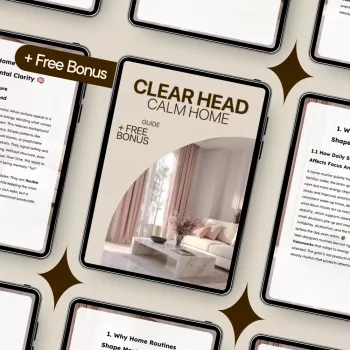
If building routines feels easy in theory and impossible in practice, a structured toolkit can help. Clear Head, Calm Home: A Practical Guide to Home Routines for Mental Clarity, Focus, and Emotional Balance is designed for pick-and-choose progress: start with one routine, stabilize it, then add the next. Pair it with a simple notes-app list or a small printed checklist so the routine stays visible without demanding constant thought.
For a simple, satisfying “drop zone” option on a desk or entry table, consider using a dedicated catchall tray or container. A playful choice that still serves the function is the Creative Dice-Shaped Ashtray – Unique Desktop Accessory for Home or Office—use it as a designated spot for coins, keys, or small daily items to reduce surface scatter.
Return to the minimum version (5–10 minutes) and restart just one anchor routine, like resetting the sink after dinner. Use your next weekly reset to recover without guilt—consistency comes from returning, not from never slipping.
Start with 1–2 anchor moments and keep each routine small enough to complete on low-energy days. Add another routine only after the first one is happening consistently without requiring a big push.
Yes—focus improves when shared spaces have clear zones (a shared drop zone, one “owned” surface per person, and a defined spot for essentials). Short scheduled resets for common areas also prevent clutter from becoming a constant visual distraction.





Leave a comment