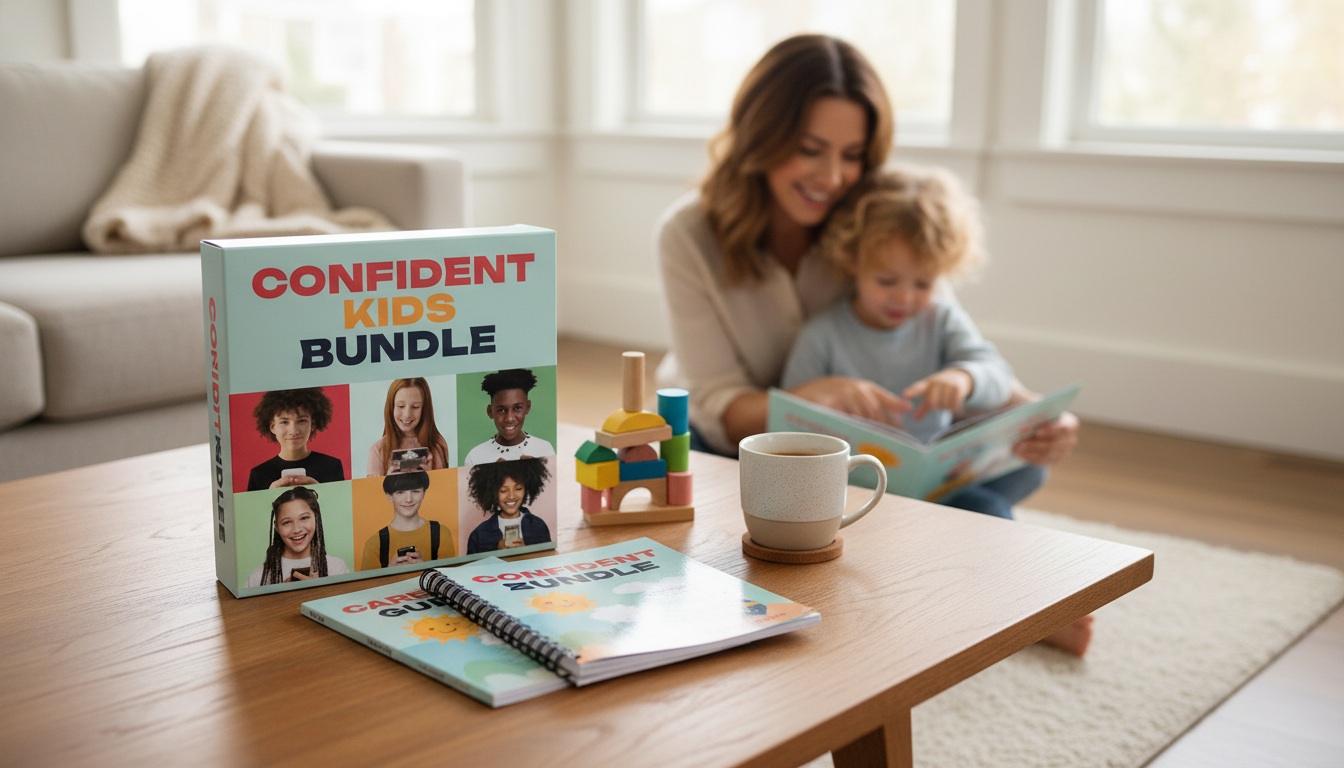
Big feelings are normal in the preschool years, but kids need repeated, simple practice to name emotions, calm their bodies, and rebuild confidence after mistakes. The Confident Kids Bundle brings those pieces together in one practical system: a parenting guide, self-esteem activities for ages 3–5, and an emotional intelligence checklist. Used as a set, it helps caregivers build steady routines that strengthen resilience at home, at preschool drop-off, during playdates, and in everyday “little” moments that can feel huge to young kids.
Emotional strength in preschool doesn’t mean kids never melt down. It looks more like growing skills over time: shorter recovery after disappointment, more words for feelings, and a willingness to try again even when something feels hard.
Developmental milestones vary, but it’s common at this age for kids to be learning impulse control, flexible thinking, and social problem-solving. Helpful references include the CDC developmental milestones and guidance from the American Academy of Pediatrics.
The strength of this bundle is that it doesn’t rely on long talks after a hard moment. Instead, it creates a repeatable loop: teach one skill, practice it when calm, then reinforce it with simple tracking so caregivers stay consistent.
| Bundle piece | What it supports | When to use it | Example outcome |
|---|---|---|---|
| Parenting guide | Emotion coaching routines and language | During tough moments or daily check-ins | Child learns simple phrases for feelings and needs |
| Self-esteem activities (3–5) | Confidence through play and repetition | Short practice blocks (5–15 minutes) | Child tries again after a mistake without melting down |
| Emotional intelligence checklist | Progress tracking and next steps | Weekly review or before a new routine | Caregiver spots patterns and targets one skill at a time |
For families who want a structured starting point, the Confident Kids Bundle: Nurturing Emotional Strength is designed to keep the plan simple enough to actually use on busy days.
Preschoolers learn best in tiny doses, repeated often. A weekly rhythm can keep things steady without turning emotional learning into “one more task.”
If multiple adults help with caregiving, consider sharing the same core phrases and expectations. Consistency is one of the fastest ways to reduce power struggles and shorten meltdowns.
At ages 3–5, confidence grows through safe practice: kids take small risks, make mistakes, recover, and discover they can handle it. Activities work best when they feel like play, not performance.
These are foundational skills that support social and emotional learning across settings. For a broader overview of SEL competencies, the framework from CASEL is a helpful reference point.
For families who also want to build responsibility and confidence through daily routines (beyond emotions), the Delegating Meal Planning to Kids printable family guide pairs well with a “skills first” approach—kids practice choice-making, follow-through, and flexibility in a low-stakes way.
The self-esteem activities are designed for ages 3–5. Caregivers can adapt the language for slightly younger kids by simplifying choices and shortening practice time, and support slightly older kids by adding more problem-solving steps and independence.
Many families notice small wins within a few weeks, like more frequent feeling words or a shorter recovery time after disappointment. Progress depends on consistent practice and each child’s development, so the goal is steady improvement rather than a quick fix.
Try shorter sessions, offer a choice between two activities, and practice when your child is already calm (not mid-meltdown). If things keep derailing, use the checklist to step back to an easier “next skill” and rebuild momentum through play.






Leave a comment