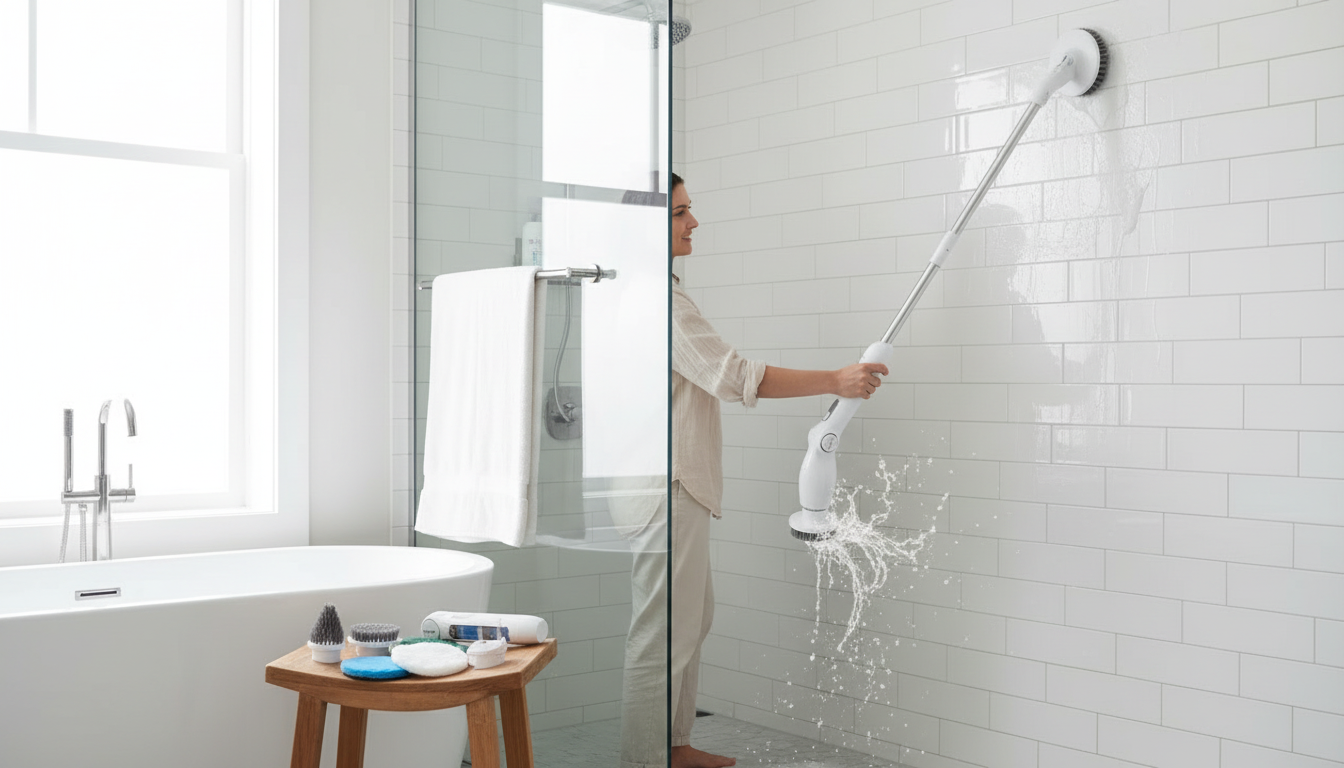
Tough soap scum, grout lines, and hard-water stains often require more force (and awkward scrubbing angles) than hands and sponges can comfortably deliver. A cordless electric spin scrubber helps reduce effort by pairing rotating brush heads with an extendable, adjustable arm—making it easier to reach tubs, tiles, floors, and corners while keeping pressure consistent. For general cleaning guidance and safer product choices, it also helps to follow recommendations from sources like the CDC and the EPA Safer Choice program.
A rotating scrubber isn’t just about speed—it’s about reaching buildup in places that are annoying to tackle by hand and maintaining steady agitation without wearing out your wrists.
When a power scrubber becomes a regular part of quick cleanups, the details start to matter: reach, balance, brush variety, and how easily you can swap attachments.
| Cleaning job | Helpful brush type | Why it helps | Tip |
|---|---|---|---|
| Grout lines | Narrow/pointed or small round head | Gets into grooves and corners | Pre-spray cleaner and wait a few minutes before scrubbing |
| Flat tile walls | Large flat head | Covers more surface per pass | Use light, even pressure to avoid splatter |
| Tub curves and seams | Round head | Matches curved surfaces and edges | Work from top to bottom to prevent re-soiling |
| Shower door tracks | Small detail head | Fits tight channels | Wipe slurry out of the track between passes |
| Stubborn spots | Stiffer bristle head | Adds agitation where buildup is thick | Test in a small area first on delicate finishes |
A big advantage of an all-in-one kit is the ability to switch from broad coverage to detail work without improvising tools.
For shower walls, a longer setting helps you stay upright and keep a comfortable stance. For tubs and sinks, shortening the arm can improve control and reduce splatter because the head stays closer to your line of sight.
Rotating bristles provide agitation, but the fastest cleanups come from combining the right brush with the right routine.
If you’re cleaning soap scum in a shower, a practical sequence is: spray and wait a few minutes, scrub top-to-bottom in sections, rinse, then do a final wipe. That last wipe can make the difference between “clean” and “stays clean longer,” especially in hard-water areas.
Reach and posture are often what make deep cleaning feel exhausting. An extendable arm helps shift effort away from your back and shoulders while still applying consistent contact.
A few minutes of care after each session keeps the kit ready and helps brush heads last longer.
Yes, especially on sealed tile and grout. Start with a suitable brush head and light pressure, pre-spray cleaner, and test in a small spot if the surface is delicate or the grout is old.
Head shape and bristle stiffness determine reach and agitation. Large flat heads speed up wide areas, narrow/detail heads get into tracks and corners, and stiffer bristles help on thick buildup but can be too harsh for delicate finishes.
Remove and rinse brush heads thoroughly, shake off water, and air-dry. Wipe the handle/motor housing with a damp cloth and avoid submerging electrical parts.





Leave a comment