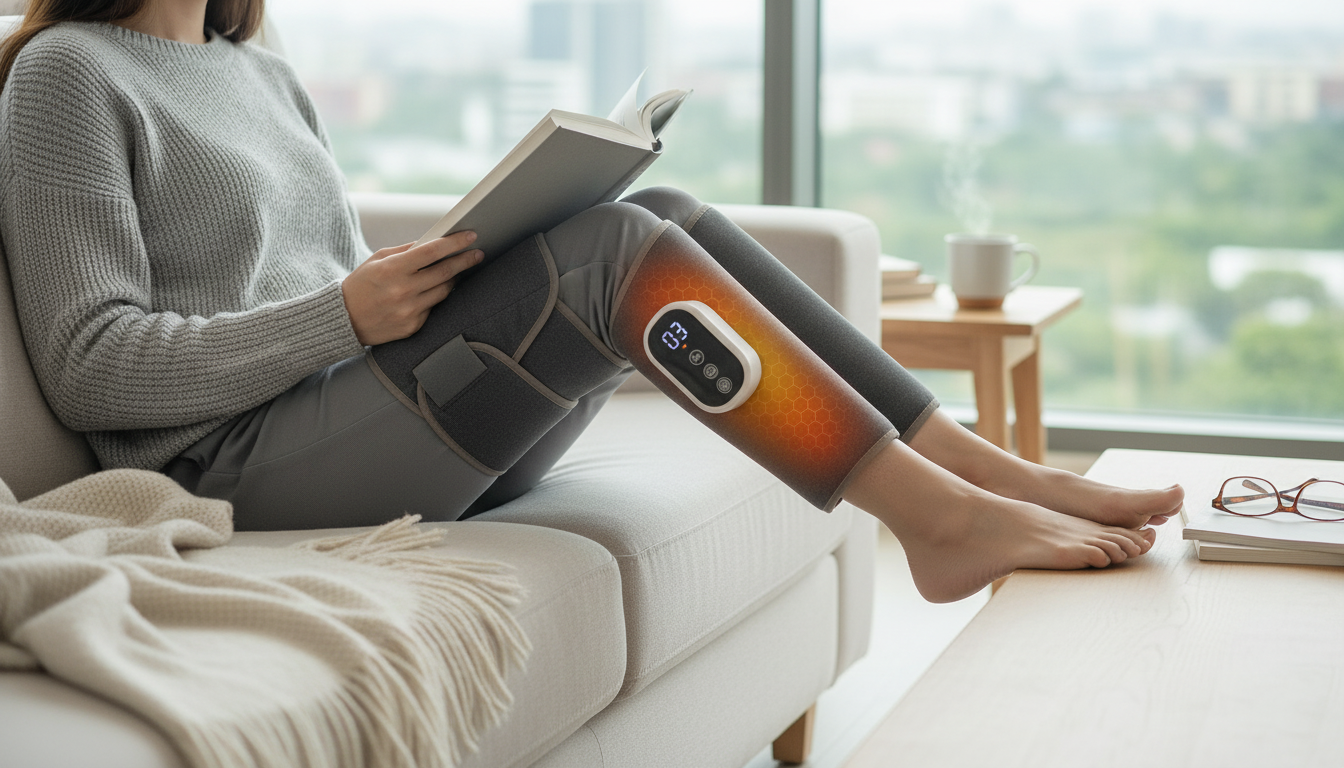
Long days on the feet, tough workouts, travel, and deskbound routines can leave calves and lower legs feeling heavy and tight. A full-coverage air pressure massager wraps the lower leg and uses rhythmic compression to help legs feel lighter, looser, and more recovered—without requiring a massage appointment. If you prefer a hands-free routine that’s easy to repeat a few times a week, an air pressure compression wrap can be a simple way to unwind and reset after daily strain.
Air pressure calf massagers are designed for people who want even, wraparound compression rather than a pinpoint “spot treatment.” They’re especially helpful for:
When calves feel tight or cramp-prone, it can also help to pair a gentle massage routine with common-sense basics like hydration and stretching. For a broader overview of causes and relief ideas, see Cleveland Clinic’s guide to leg cramps (Cleveland Clinic: Leg cramps).
Instead of kneading with rollers or vibrating in one spot, air pressure systems use internal chambers that inflate and deflate in a sequence. The result is a squeeze-and-release pattern around the calf and lower leg.
| Option | Sensation | Best For | Things to Consider |
|---|---|---|---|
| Air pressure compression wrap | Squeeze-and-release cycles | Full lower-leg coverage and hands-free use | Fit and pressure should feel snug, not painful |
| Foam roller | Deep pressure you control | Targeting specific tight spots | Requires effort and can be uncomfortable for some |
| Handheld percussion massager | Tapping/rapid pulses | Local muscle work on demand | Harder to reach evenly around the calf |
| Compression socks | Steady compression | All-day support | Not an active massage cycle |
Massage in general is often used for relaxation and easing muscle tension. Harvard Health provides a helpful overview of potential benefits and practical considerations (Harvard Health Publishing: The health benefits of massage).
Not all leg compression wraps feel the same. A few design details can strongly influence comfort, consistency, and how often it actually gets used.
A good rule of thumb: the wrap should feel evenly snug, with no sharp pinching behind the knee, at the shin, or around the ankle. If one area feels dramatically tighter than the rest, it’s usually a fit issue—not a “stronger massage.”
Comfort matters more than brute force. If the experience is too intense, it’s harder to stick with a routine, and consistent use is what typically delivers the best day-to-day payoff.
The Electric Calf and Leg Massager – Full Coverage Air Pressure Massage is built for wraparound calf coverage and hands-free, squeeze-style compression. It’s a practical option for end-of-day relaxation, post-workout decompression, or winding down after long travel days.
| Item | Details |
|---|---|
| Product | Electric Calf and Leg Massager – Full Coverage Air Pressure Massage |
| Price | $129.80 |
| Availability | In stock |
| Best For | Relaxation and compression-style leg recovery at home |
If you’re concerned about symptoms like sudden swelling, heat, or calf pain—especially after travel—seek medical advice promptly. For background, the NHS explains deep vein thrombosis (DVT) signs and risk factors here: NHS: Deep vein thrombosis (DVT).
Many people use a 10–20 minute session, especially when following the built-in timer. Start shorter for the first few uses, keep intensity comfortable, and stop if you feel pain, numbness, or tingling.
It can be a helpful part of a post-workout routine by promoting relaxation and easing that “heavy legs” feeling after training. Pair it with hydration and gentle calf/ankle mobility for a more complete cooldown.
Expect a snug, even squeeze that releases in cycles—firm but comfortable. If you notice sharp pain, numbness, or tingling, lower the intensity and refit the wrap so pressure is more evenly distributed.







Leave a comment