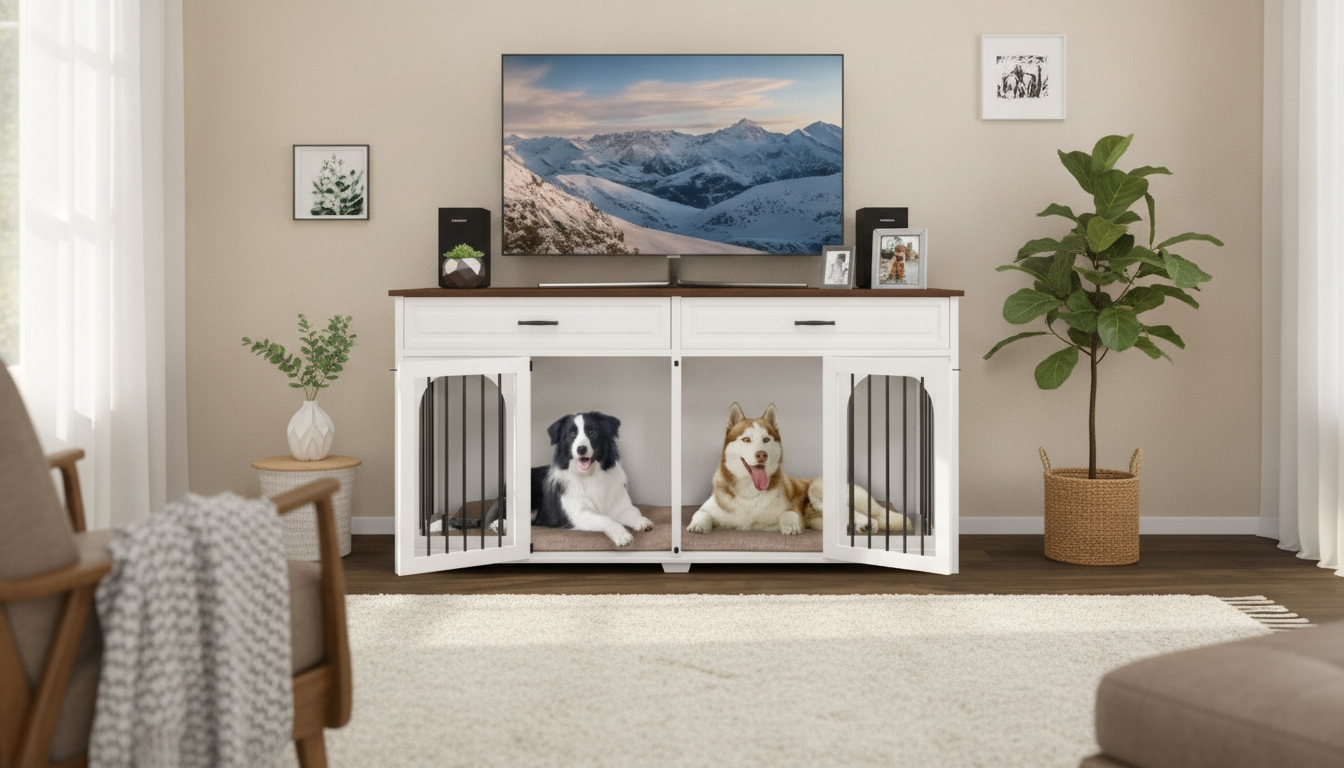
A home-friendly dog crate can do more than contain—this furniture-style design blends into a living room while adding storage and a sturdy top surface for a TV or décor. With a divider for flexible sizing and drawers for everyday pet essentials, it’s built to keep the space organized without making the crate the focal point.
Traditional wire kennels are effective, but they’re visually loud in a shared space. A furniture-style dog crate is designed to read more like a console, sideboard, or compact media stand—something that looks intentional next to a sofa, nightstand, or entry bench.
Because it’s meant to live “out in the open,” the best results come from pairing the crate with a steady routine and positive training. If you’re working on that foundation, the training guidance from the American Kennel Club and the ASPCA can help reinforce calm, safe crate habits.
The standout advantage of this design is that it doesn’t just “hold a dog”—it supports the everyday rhythm around your dog. The divider helps adjust usable interior space, and the drawers keep the high-frequency items (leash, bags, treats) from drifting across counters and coffee tables.
| Feature | What it’s for | Practical tip |
|---|---|---|
| Divider panel | Adjusts interior space for growth or comfort | Start with a smaller area; expand as the dog reliably stays clean and relaxed. |
| Drawers | Storage for supplies | Use one drawer for walk gear and one for grooming/first-aid items. |
| Furniture-style enclosure | Blends with home décor | Place where the dog can still see the family without being in heavy traffic. |
| TV-stand top | Adds a usable surface | Confirm TV size/weight and keep cords secured and out of reach. |
Placement can make or break crate success. The goal is a spot that feels connected (your dog can observe daily life) but not chaotic (constant foot traffic, loud door slams, or narrow walkways).
If your household includes kids or frequent guests, thoughtful placement also supports safe management. Resources like the AVMA’s dog bite prevention guidance emphasize supervision and smart boundaries—having a predictable “quiet zone” can be part of that plan.
A furniture-style crate looks clean on the outside; the inside should feel calm and practical. Before regular use, do a quick setup check so the crate stays a positive, reliable space.
If you want contained downtime without sacrificing living-room function, the Furniture-Style Dog Crate with Divider, Drawers, and TV Stand Top offers a clean, multipurpose setup: a divider to fine-tune the interior and drawers to keep daily gear in one consistent place.
Since this piece doubles as a console, a small decorative touch can help it blend even more naturally with your room. A soft accent on a nearby chair or shelf can make the crate area feel like part of the home rather than a “pet corner.” One easy option is the Adorable Capybara Plush Pillow, which works as a playful, living-room-friendly accent.
It can be safe if the top is flat, stable, and rated to support the TV’s weight without wobbling. Keep ventilation clear, secure cords so they can’t be chewed or tugged, and choose a placement that discourages jumping or pawing at the screen.
Start with enough room for the puppy to stand up, turn around, and lie down comfortably, while limiting extra space early on. As your puppy grows and consistently stays clean and relaxed in the crate, move the divider to gradually increase the usable area.
Use one drawer for walk essentials like leashes, harnesses, and waste bags, and the other for grooming items and training treats in sealed containers. Keep anything unsafe—like medications, sharp tools, or small choking hazards—secured and out of reach.



Leave a comment