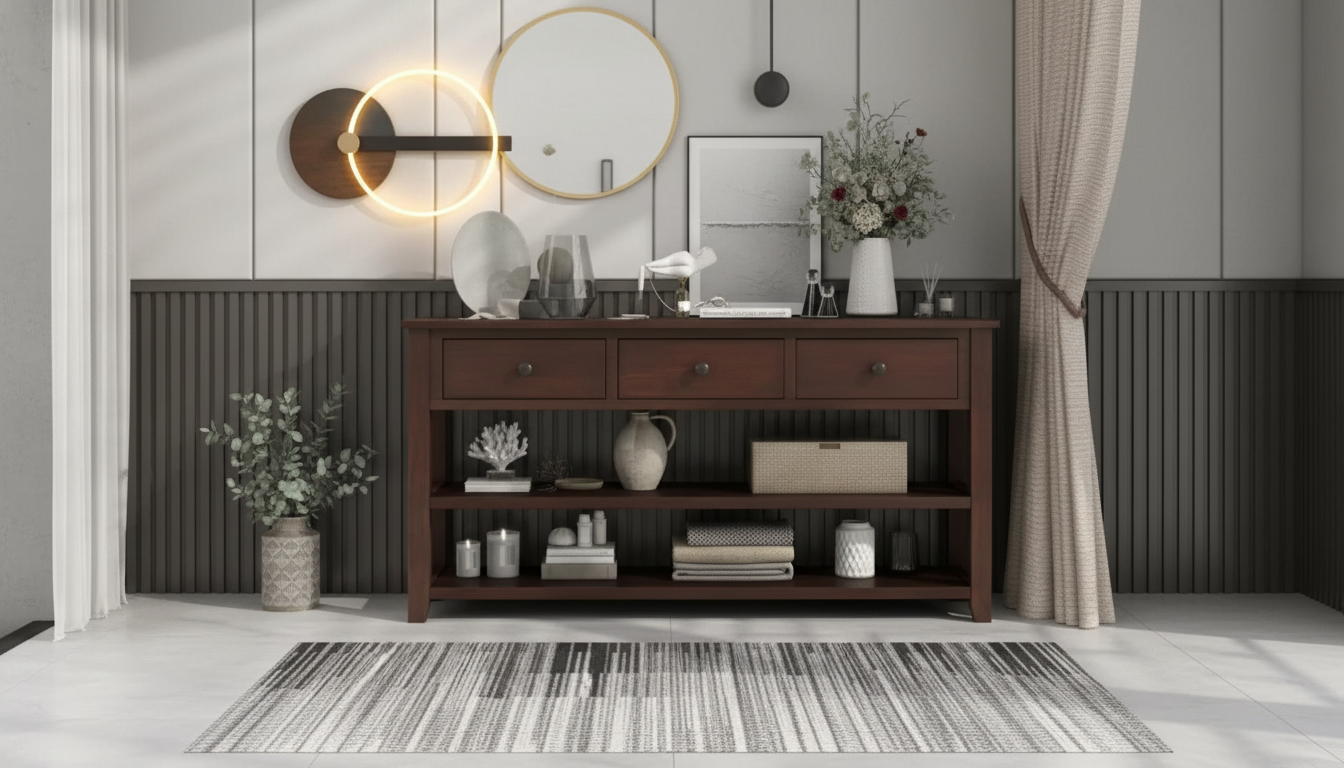
A long console table can turn an entryway into an organized landing spot for daily essentials while keeping the space open and welcoming. With drawers for small items and double open shelves for baskets and décor, this style balances hidden storage with easy access—ideal for high-traffic homes that need order without bulk. The result is a smoother “walk in, set down, head out” routine that still looks pulled together.
Entryways collect everything: keys, mail, sunglasses, dog leashes, backpacks, and the random items that somehow follow everyone home. A long console table helps because it gives those items a clear home without crowding the walkway.
The most workable entryway furniture pieces don’t rely on one type of storage. Drawers handle the small, messy stuff; open shelves handle the bulky, frequently grabbed items; and the top keeps the day-to-day essentials within reach.
| Area | Best for | Quick organizing tip |
|---|---|---|
| Top surface | Daily drop items (keys, wallet, phone) | Use a tray + small catchall bowl; keep only today’s essentials visible |
| Drawers | Small items (spare keys, stamps, batteries) | Assign one drawer to “out-the-door” items and add a drawer organizer |
| Upper open shelf | Baskets, hats, gloves, dog gear | Use two matching baskets so the shelf reads tidy even when full |
| Lower open shelf | Shoes, bulkier bags, décor books | Keep a shoe mat or basket to corral pairs and simplify cleaning |
A console table should make the entry easier to use, not harder. Before buying, measure the wall and think about the daily path through the space—especially door swings and tight hallway traffic.
For households planning around accessibility, it can help to reference general passage and clear-floor guidance in the ADA Standards for Accessible Design. Even in non-ADA residential settings, the principles can guide more comfortable spacing, especially in narrower entries.
Entryway styling works best when it follows a simple rule: décor should support function, not compete with it. The goal is to keep the top surface calm, so the table doesn’t become an accidental dumping ground.
If a quirky, conversation-starting catchall helps the habit stick, a small desktop accessory can make the “drop zone” feel intentional rather than temporary.
For a deeper overview of furniture tip-over risks and prevention, review the CPSC Furniture Tip-Over Prevention guidance.
Consider the Long Console Table with 3 Drawers and Double Open Shelves for Entryway for a storage-forward setup that still feels streamlined.
For a small add-on that can act as a fun catchall on the top surface, the Creative Dice-Shaped Ashtray – Unique Desktop Accessory for Home or Office can work as a contained spot for coins or small pocket items (where appropriate for your household).
For homeowners planning a long-term “easy to navigate” entryway (including aging-in-place considerations), the National Association of Home Builders offers a helpful overview of universal design and aging-in-place concepts that align well with clear pathways and reachable storage.
Use drawers for small, easy-to-lose items like keys, chargers, sunglasses, and mail tools. Use open shelves for larger, frequently grabbed items like baskets, shoes, and tote bags, and keep heavier items on the lowest shelf for better stability.
Create zones: a tray for daily essentials, one “inbox” basket for mail, and labeled bins on shelves. Keep a simple rule that the top holds only a lamp plus one tray and one décor item, and move everything else into drawers or baskets.
Anchoring is recommended, especially with children, pets, or frequent drawer use. Follow the manufacturer instructions and use the right hardware for your wall type to reduce tip-over risk.




Leave a comment