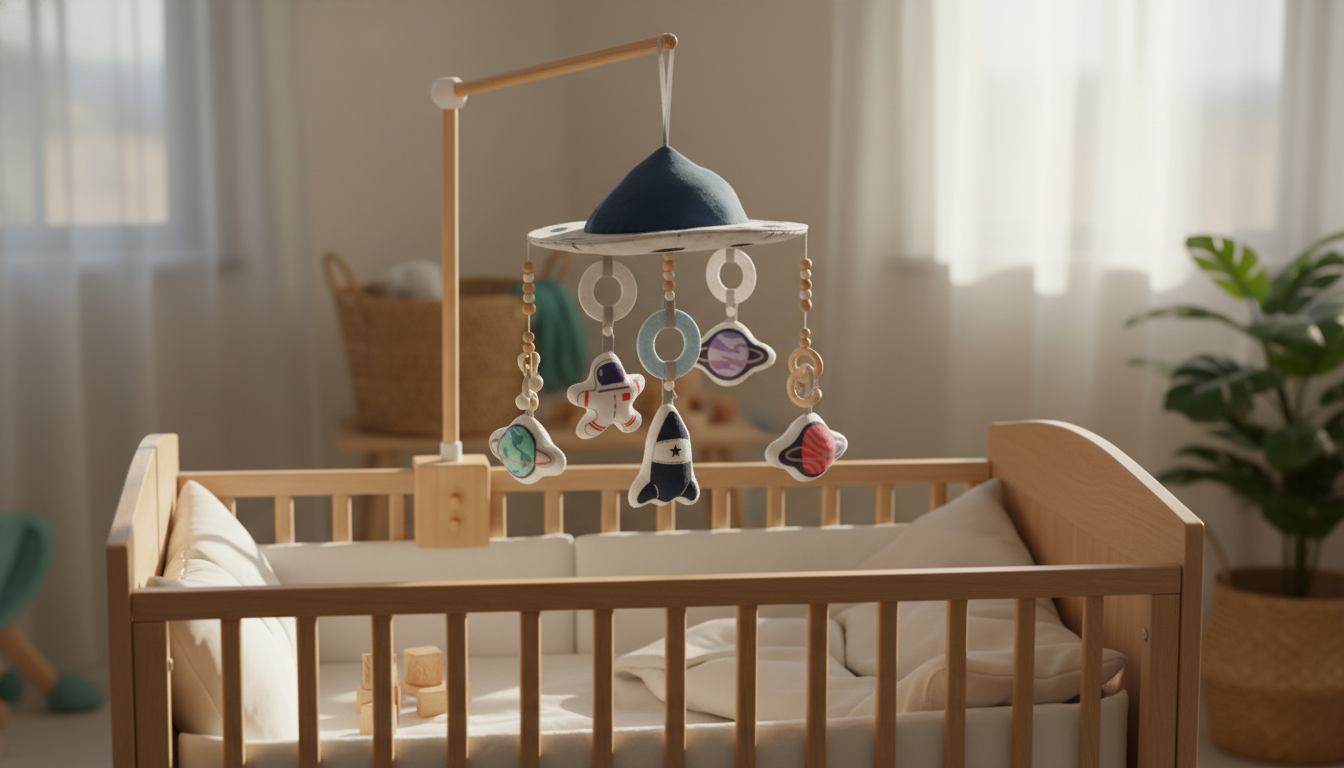
A wooden crib mobile with gentle music and rattles can add calming movement and sound to a nursery while supporting early sensory development. When used correctly during supervised awake time, it can encourage visual tracking, early focus, and those first reach-and-grasp attempts—without turning the sleep space into a noisy, overstimulating scene.
If you’re considering a simple, Montessori-inspired option, take a look at the Wooden Baby Crib Mobile with Musical Rattles – Montessori Educational Toy. For families planning ahead for life with a little one beyond the nursery, the Find Perfect Kid-Friendly Destinations with AI | Digital Family Travel Guide can also be a helpful resource for simpler trips later on.
This style of mobile blends natural wood elements, hanging shapes, and optional music or rattle sounds to engage more than one sense at a time. The goal isn’t constant entertainment—it’s a gentle, predictable point of interest that a baby can study while alert.
Montessori-inspired design tends to prioritize order, simplicity, and purposeful materials. In a nursery, that often translates to fewer objects—but ones that invite deeper attention.
For a broader overview of Montessori principles, the Association Montessori Internationale provides a clear introduction to the approach.
Sound can be a plus—especially when it’s gentle and optional. Brief, low-volume music can become part of a wind-down routine before a diaper change or after feeding, while rattle sounds add light auditory variety during play windows.
Mobiles should be treated as nursery accessories that need regular checks, especially as babies grow quickly and their reach changes. Prioritize safe finishes, secure attachments, and correct placement.
| Check | What to Look For | When to Re-check |
|---|---|---|
| Height above mattress | Out of reach even with arms fully extended | After changing mattress height or when baby’s reach increases |
| Cords/strings | No long loose cords; secure knots and connectors | Weekly and after moving the crib |
| Hanging pieces | No cracks; firmly attached; no sharp edges | Weekly and after any drop/impact |
| Mount/arm stability | Does not wobble or tilt when lightly tested | After installation and periodically |
| Sound feature | Gentle volume; not constant or startling | As baby’s preferences change |
For additional guidance on safe sleep and keeping the sleep environment free from hazards, consult the American Academy of Pediatrics safe sleep recommendations and the CPSC crib safety information.
Placement affects both comfort and how well the mobile supports visual tracking. Aim for a view that invites attention without hovering directly over the baby’s face.
Mobiles tend to work best in small doses. Think of them as a short, calming activity during alert windows—not an all-day feature.
Follow the manufacturer’s guidance and keep the mobile out of reach at all times. In many homes, mobiles are used primarily for supervised awake time, and they’re repositioned or removed as a baby grows and can grab or pull up.
Move it higher or remove it when your baby’s reach increases or when milestones like pushing up, sitting, or pulling to stand make grabbing more likely. Re-check placement any time you adjust the crib or mattress height.
Keep sessions short, visuals simple, and volume low. Use music only sometimes, and stop the activity when your baby turns away, seems tired, or becomes fussy.







Leave a comment