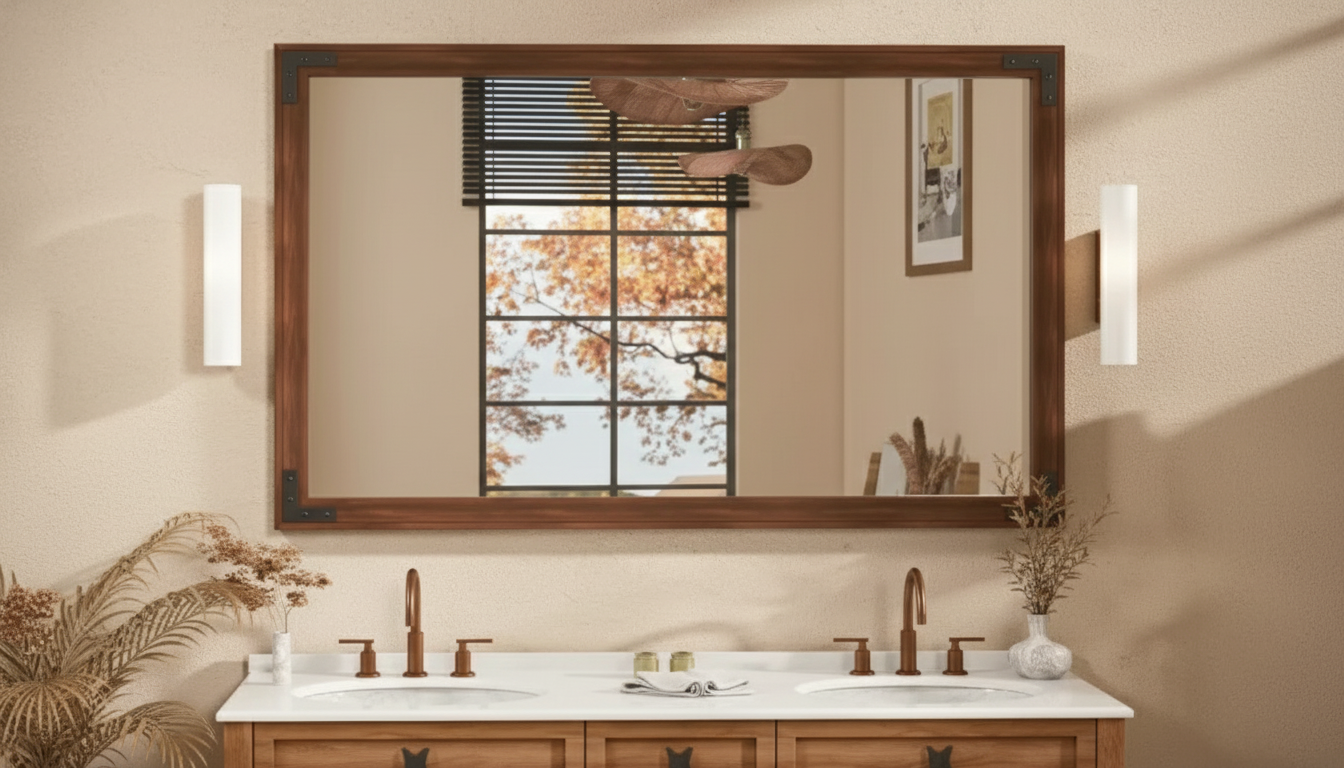
A rustic black wooden framed wall mirror adds depth, light, and a grounded focal point to a room. The dark frame brings contrast that works especially well with warm neutrals, natural textures, and vintage-inspired interiors—while still fitting clean, modern spaces that need a touch of warmth.
A black wood frame reads as intentional from across the room. The deep tone creates a crisp outline that visually “anchors” the mirror on the wall, especially when the surrounding palette is light, airy, or neutral.
Because wood is a natural material, it responds to changes in humidity and temperature over time. If you’re placing a wood-framed mirror in a bathroom or near exterior doors, consistent ventilation helps reduce seasonal movement and stress on joints. For a deeper, technical overview of wood behavior, see the USDA Forest Products Laboratory’s Wood Handbook.
Rustic black is versatile because it can feel heritage-inspired or clean-lined depending on what you place around it. The goal is to repeat the black tone a few times so the mirror doesn’t feel like a lone dark spot.
For an easy “pulled together” look, keep the surrounding objects simple: one tall element (like a vase), one medium element (like a small lamp), and one low element (like a tray). That tiered height structure lets the mirror be the main feature without the surface below feeling cluttered.
Mirrors do more than reflect—they redirect daylight, open up narrow passages, and create a stronger sense of symmetry. A rustic black frame can also visually define a transition area, like an entry or hallway, where you want the wall to feel finished.
| Room | Ideal height guidance | What it enhances | Quick styling tip |
|---|---|---|---|
| Entryway | Center around eye level; leave space above console decor | Openness and first impression | Add a tray and one tall vase to balance the frame |
| Bathroom | Align with vanity centerline; keep edges clear of splashes | Brightness and sharp contrast | Match hardware finish for a cohesive look |
| Bedroom | Center above dresser; keep the top near comfortable viewing height | Routine and calm symmetry | Use two smaller lamps to frame it |
| Living room | Hang so the mirror visually relates to furniture below | Depth and light reflection | Repeat black accents in one lamp or frame nearby |
| Dining | Place to catch daylight from windows | Airiness and ambiance | Add a subtle centerpiece; keep the wall uncluttered |
In bathrooms, placement matters as much as style. Keeping the mirror away from direct splash zones and maintaining steady airflow can help protect the frame over time. For practical guidance on improving airflow, the EPA’s indoor air quality and ventilation basics is a helpful reference.
In family homes, wall safety is part of good design. If you’re pairing a mirror over a narrow console or in a high-traffic entry, securing nearby furniture can reduce tip-over risk. The CPSC home safety guidance offers a useful overview of safer setups.
If you’re ready to add contrast with texture, the Rustic Black Wooden Framed Wall Mirror is a bold, grounded accent for entryways, bathrooms, and living spaces where depth and definition matter. It pairs especially well with warm whites, light oak tones, stone textures, and matte black fixtures.
To style the surface below without overpowering the mirror, keep accessories minimal and sculptural. A small, unexpected accent—like the Creative Dice-Shaped Ashtray – Unique Desktop Accessory for Home or Office—can add personality on a console or bar cart while the mirror remains the main focal point.
Use eye level as a baseline, then adjust so the mirror visually relates to the furniture beneath it (like a console or vanity). Centering the mirror thoughtfully and keeping consistent margins from trim or nearby decor helps it look intentional.
Yes—choose a spot with good ventilation and keep it away from direct splashes when possible. Wipe off moisture promptly and avoid harsh cleaners on the wood to help protect the finish over time.
Dust with a dry microfiber cloth and avoid soaking the frame. For the glass, apply cleaner to your cloth first so liquid doesn’t wick into seams or corners.





Leave a comment