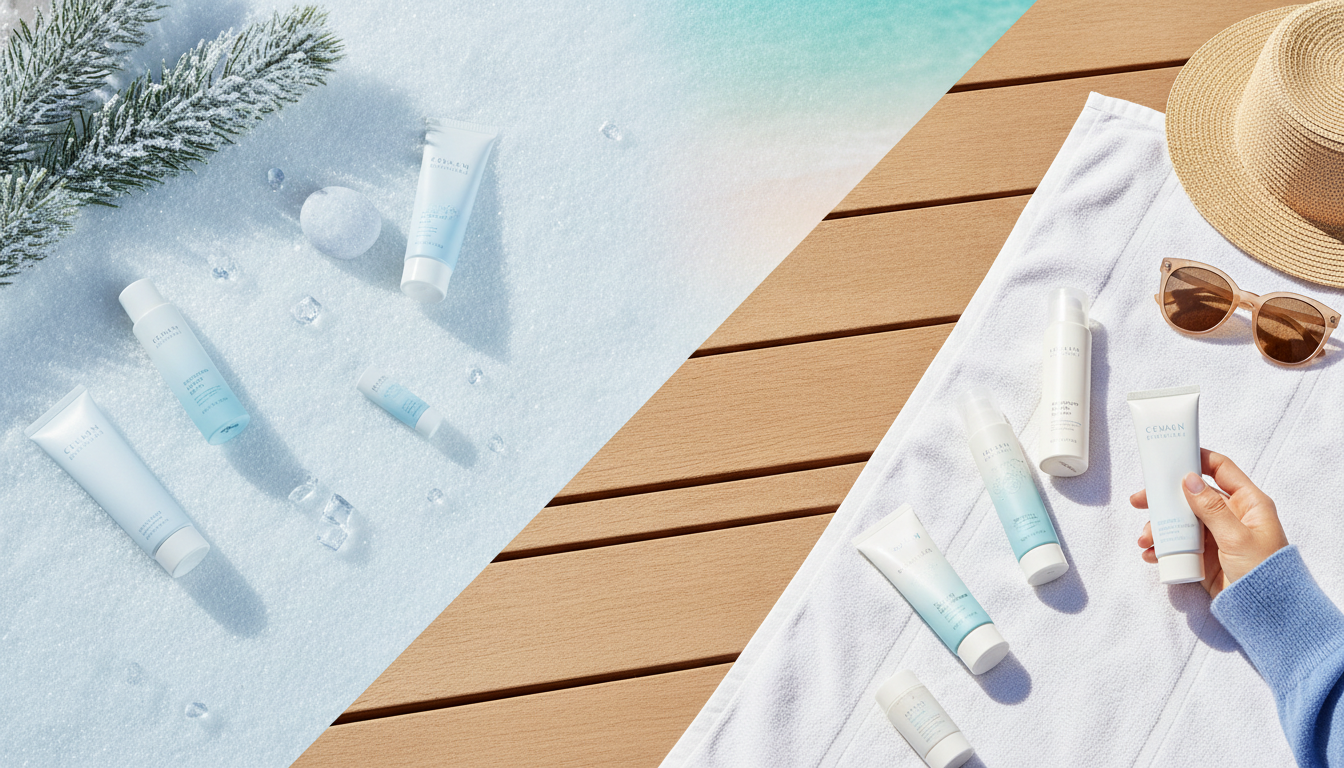
Skin needs change with temperature, humidity, wind, indoor heating, sweat, and sun exposure. A routine that feels perfect in July can suddenly cause tightness or flaking in January, while a rich winter routine can feel heavy or congestion-prone in summer. This guide breaks down what to adjust, what to keep consistent, and how to choose products by texture and ingredients so the routine stays comfortable and effective year-round.
Seasonal shifts affect how quickly skin loses water, how much oil it produces, and how reactive it feels. In winter, low outdoor humidity plus indoor heating can increase transepidermal water loss, leading to dryness, irritation, and sensitivity. Cold wind and frequent hot showers can make that worse by stressing the barrier.
In summer, heat, sweat, and higher UV exposure can increase oiliness and inflammation. Sunscreen, sweat, and sebum can combine into a “film” that makes products feel heavier, slide around, or contribute to clogged pores—especially if the routine is overly occlusive.
Another common surprise: the same active ingredients can feel very different across seasons. Strong exfoliation or retinoids that were fine in humid weather may sting when skin is drier, while heavy moisturizers that soothed in winter can feel congesting in summer. The goal is to match cleanser strength, hydration level, occlusion, and sun protection to the season without overhauling everything at once.
| Routine step | Winter focus | Summer focus |
|---|---|---|
| Cleanser | Gentle, non-stripping; creamy or hydrating formulas | Light gel/foaming if needed; remove sweat/sunscreen without over-drying |
| Hydration | Layer humectants + barrier-supporting ingredients | Hydrate lightly; avoid sticky layering in high humidity |
| Moisturizer | Richer texture; add ceramides and occlusives as needed | Lighter lotion/gel-cream; non-comedogenic if congestion-prone |
| Exfoliation | Reduce frequency if tight, flaky, or sensitized | Maintain moderate frequency; avoid overuse with sun/heat |
| Sunscreen | Daily broad-spectrum; consider more emollient feel if skin is dry | Daily broad-spectrum; sweat-resistant options for outdoor time |
A seasonal switch works best when the “core” stays steady and only the stress points change.
Winter skin care is mostly about reducing water loss and keeping the barrier calm. The American Academy of Dermatology also recommends simple changes during cold months, like avoiding overly hot showers and using fragrance-free moisturizers when prone to dryness (AAD winter skin care tips).
If winter skin still feels tight, the fix is often more about sequence than more products: humectant on slightly damp skin, moisturizer next, and a small amount of occlusive only where needed.
Summer routines shine when they feel breathable and hold up to heat, sweat, and sunscreen reapplication.
The core steps can stay the same, but textures and intensity often need adjusting as humidity, temperature, wind, sweat, and sun exposure change. Most people notice the first “must-change” items are moisturizer weight, cleanser strength, and how sunscreen feels and wears.
Make changes gradually: swap one product at a time and give it 1–2 weeks before changing something else. Lighten moisturizer and sunscreen textures first, keep cleansing gentle, and reduce heavy occlusives that can feel too sealing in heat.
Low humidity, indoor heating, and over-cleansing can increase water loss so skin feels tight even when moisturized. Pair a humectant step with a barrier-support moisturizer (like ceramides), and use targeted occlusion on the driest areas to lock in comfort.







Leave a comment