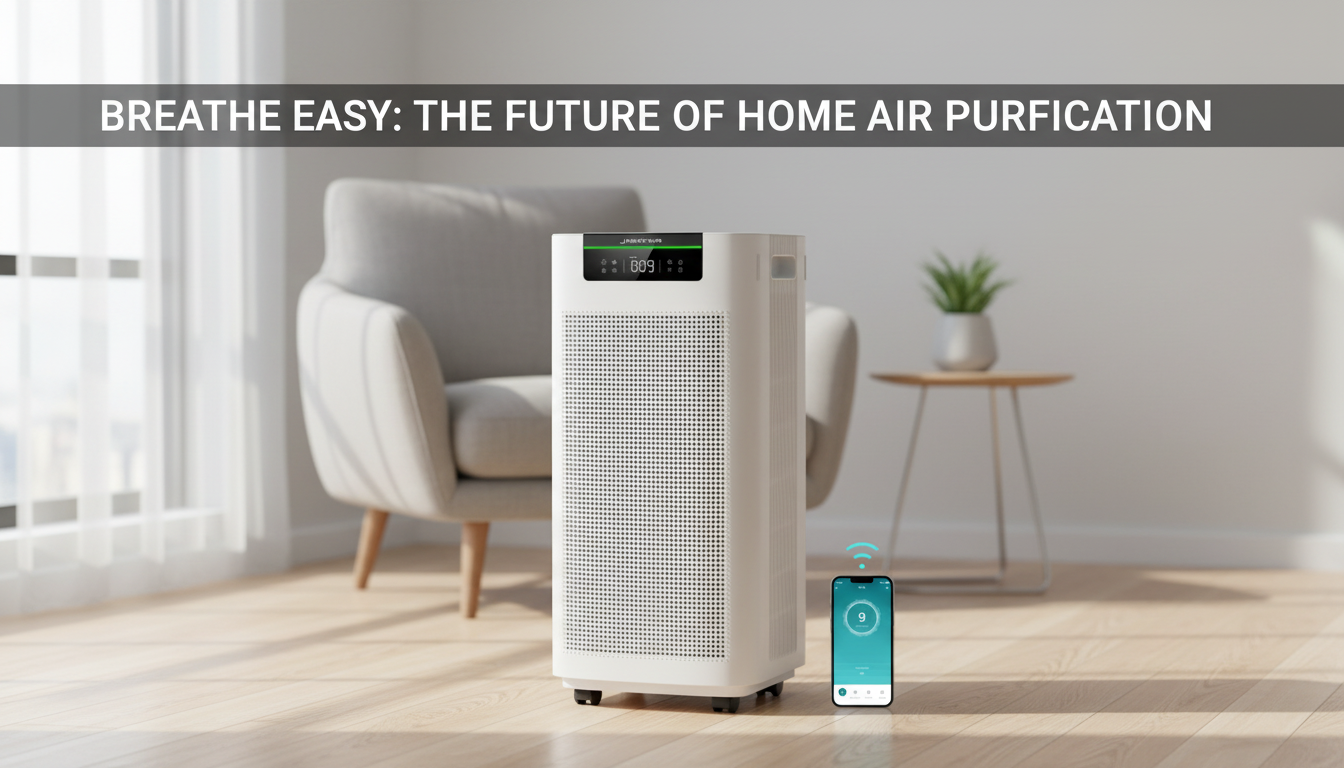
Keeping indoor air fresher across a large open-plan home or multi-room area usually requires more than an on/off switch. A smart air purifier built for up to 3800 ft² can run consistently in the background—automating clean-air cycles so the space doesn’t depend on someone remembering to tap a button.
Day to day, the biggest difference is continuity. Instead of reacting after odors linger or smoke drifts in, you can schedule higher airflow when the house is most active (cooking, cleaning, kids coming and going) and quieter operation overnight. App control also makes it easier to keep cleaning going during work hours, travel, or whenever you’re not in the same room as the unit.
For large rooms, “set it and forget it” is especially valuable because contaminants move fast: cooking smells spread down hallways, pet dander drifts between rooms, and outdoor haze can affect multiple zones at once. Smart control helps keep the purifier running proactively rather than only when the air already feels stale.
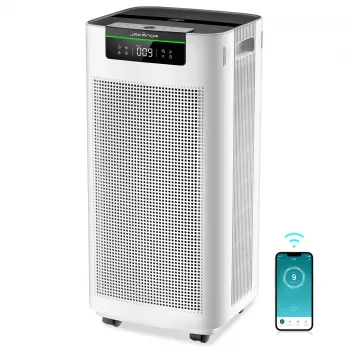
This smart unit is designed for large coverage areas—up to 3800 ft²—making it a practical match for expansive living spaces, finished basements, studios, or open-concept layouts. App control supports remote power and mode changes, and Alexa voice control adds hands-free convenience when you’re cooking, cleaning, hosting, or simply don’t want to walk across a big room to make an adjustment.
Current price: $560.80 USD. Availability: in stock.
Smart Air Purifier for Large Rooms 3800 ft² with APP & Alexa Control
| Item | Details |
|---|---|
| Product | Smart Air Purifier for Large Rooms 3800 ft² with APP & Alexa Control |
| Coverage target | Up to 3800 ft² |
| Smart control | Mobile app + Alexa voice control |
| Price | $560.80 USD |
| Stock status | In stock |
A large-room purifier earns its keep when multiple people share the space for hours at a time or when air issues don’t stay contained to one room. It’s a strong fit for big living rooms, open-plan main floors, studios, spacious bedrooms, and shared zones where the kitchen, dining, and living areas flow together.
It can be especially helpful for pet households, frequent cooking, seasonal pollen spikes, or occasional smoke/haze events—scenarios where particle levels can rise quickly and spread widely. On the other hand, if the goal is only a compact bedroom, a smaller unit can be more cost-effective and easier to place without overpowering the room.
In multi-level homes, placement matters as much as capacity. A common strategy is to set the purifier near the most-used shared zone (often the kitchen/living transition) so it captures the bulk of day-to-day particulate load.
| Space type | Typical size range | Placement tip |
|---|---|---|
| Large living room / great room | 500–1000+ ft² | Place near the center of airflow, not tucked behind furniture |
| Open-concept main floor | 1000–2500+ ft² | Position near the busiest zone (kitchen/living transition) |
| Finished basement / studio | 800–2000+ ft² | Keep away from corners; leave clearance around intakes/vents |
| Large bedroom | 250–600+ ft² | Aim for quiet/sleep-friendly settings overnight |
Not all “smart” features change real life, but a few consistently do—especially in larger spaces where walking to the unit can be inconvenient.
| Task | Why it matters | Simple cadence |
|---|---|---|
| Check filter status | Maintains airflow and cleaning performance | Monthly check |
| Clean exterior/air inlets | Reduces dust buildup and restrictions | Every 2–4 weeks |
| Replace filters (as specified) | Restores filtration capability | Per manufacturer guidance |
| Revisit schedules/routines | Aligns operation with real-life use | Seasonally or after lifestyle changes |
For wildfire smoke or heavy outdoor pollution, it helps to keep doors and windows managed, seal obvious leaks, and run purification consistently rather than intermittently. The U.S. EPA offers practical home guidance on air cleaners and filtration (EPA — Air Cleaners and Air Filters in the Home). For broader smoke-event health precautions, the CDC also provides recommendations (CDC — Wildfire Smoke).
Typically, you link the purifier’s companion app account/skill inside the Alexa app, discover the device, and name it clearly for voice commands. A stable Wi‑Fi connection usually improves reliability for on/off control, mode changes, and routines.
It varies by environment, but many households replace filters within a practical range of a few months to about a year depending on usage. Follow the manual or app reminders, and expect pets, smoke, and heavy dust to shorten filter life.
It can help reduce airborne particles when run consistently, especially when doors and windows are kept closed during smoke events. Odor reduction depends on the filter type and how well the odor source is controlled.






Leave a comment