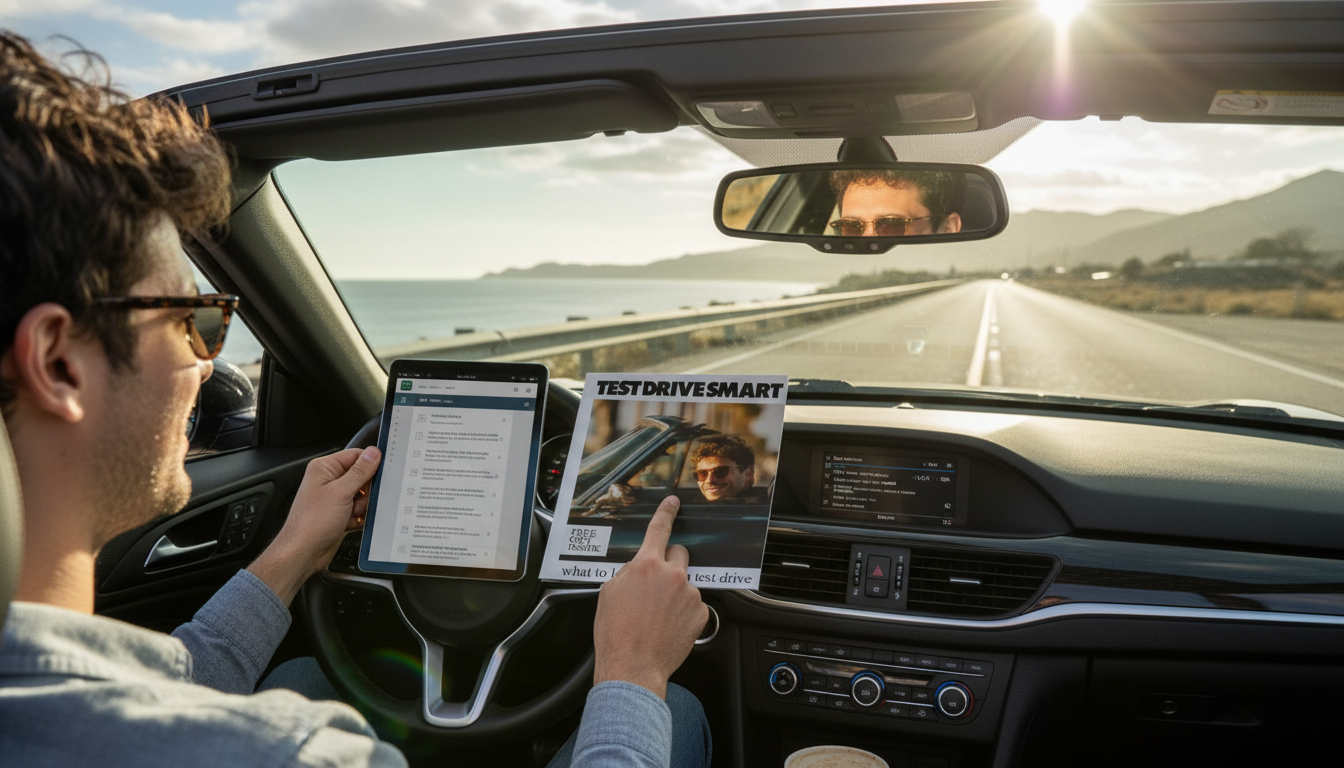
A quick loop around the block rarely reveals the issues that matter most—comfort on a long commute, visibility in traffic, brake feel in a sudden stop, or the small annoyances that become daily frustrations. A smarter test drive is a simple, repeatable routine that helps each vehicle earn its place on your shortlist. When every car is evaluated on the same standards—before, during, and after the drive—the final choice is based on evidence, not pressure.
A thorough test drive isn’t complicated—it’s consistent. The goal is to build a route and a method that highlight the realities of daily driving.
Small bits of preparation reduce distraction and make the experience more “apples-to-apples” between vehicles.
If you want a ready-to-use structure you can reuse across dealers and private sellers, Test Drive Smart – Practical eBook Guide on What to Look for in a Test Drive | Confident Car Buying Checklist & Decision Tool is designed for quick, repeatable comparisons.
You don’t need to be a mechanic to spot early warning signs. A two-minute walkaround can uncover visibility problems, comfort issues, and condition concerns—especially with used vehicles.
Do this while parked so the first part of the drive isn’t spent hunting for buttons or fighting the seating position.
On the move, focus less on “fun” and more on repeatability: how the vehicle behaves in the situations you’ll face weekly (or daily).
For a reality check beyond the test drive, compare safety performance using NHTSA vehicle safety ratings and IIHS ratings. For shopping basics and ownership considerations, the FTC’s car buying guidance is also a strong reference.
| Category | What to check | Score (1–5) | Notes / Deal-breakers |
|---|---|---|---|
| Comfort & seating | Support, adjustability, visibility from driving position | ||
| Ride & noise | Bump absorption, wind/tire noise, rattles | ||
| Braking & steering | Pedal feel, straight braking, steering precision | ||
| Ease of use | Controls, infotainment speed, phone pairing | ||
| Safety & confidence | Blind spots, camera quality, driver-assist behavior | ||
| Practicality | Cargo access, rear-seat space, storage, visibility when reversing |
Get the printable, repeatable format here: Test Drive Smart – Practical eBook Guide on What to Look for in a Test Drive | Confident Car Buying Checklist & Decision Tool.
Aim for at least 30–45 minutes with parking, city streets, and a short highway segment if possible, plus a few minutes parked to set up seating and test controls. If you’re comparing multiple vehicles, longer drives make the differences clearer.
Test visibility and blind spots, braking feel, cabin noise, seat comfort, ease of controls and infotainment, parking confidence, driver-assist behavior, and practical details like cargo access and rear-seat entry/exit.
Use the same route and a consistent scorecard each time, and write notes immediately after the drive. Record the exact trim, tires, mileage, and conditions so you’re not comparing two different setups by accident.







Leave a comment