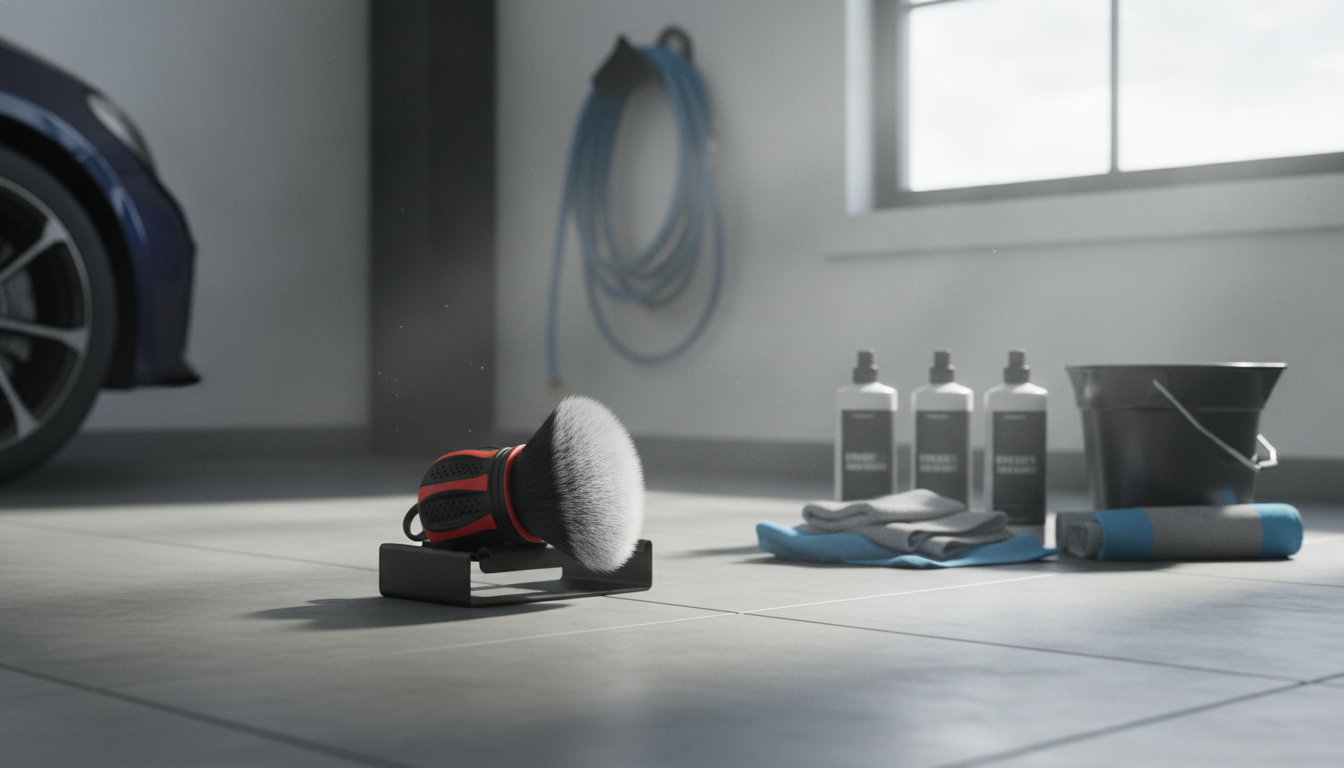
A good detailing brush does two jobs at once: it lifts dust and grime from tight areas without scratching, and it stays clean and organized between washes. This ultra soft detailing brush set with a storage rack is built for delicate interior touchpoints and careful exterior work, helping keep bristles protected, separated, and ready for the next detail session.
Not all brushes are meant for the same surfaces. Ultra soft detailing brushes are made for areas where even light scuffs show up fast—especially modern interiors with glossy trim and sensitive coatings.
For chemical handling basics and safe use guidance, it’s worth following reputable resources like the NIOSH chemical safety information, especially when using concentrated cleaners or wheel chemicals.
A rack might sound like a small add-on, but it changes how consistently clean your brushes stay. When brushes are tossed into a bucket or left on a shelf, they pick up grit and oils that can transfer right back to the next surface you touch.
| Zone | Typical Areas | Recommended Cleaner/Lubrication | Notes |
|---|---|---|---|
| Interior (delicate) | Piano-black trim, screens edges, gauge hood, dash seams | Interior cleaner on a towel or lightly misted on surface | Avoid soaking electronics; use light pressure |
| Interior (general) | Vents, cupholders, buttons, door pockets | Interior cleaner or diluted APC (per label) | Agitate, then wipe with microfiber |
| Exterior paint & trim | Badges, emblems, panel gaps, grilles | Car shampoo or rinseless wash solution | Work top-down; rinse brush frequently |
| Wheels (separate brush set) | Lug areas, spoke junctions | Wheel cleaner (per label) | Do not reuse on interior/paint |
Cabin detailing is where ultra soft bristles earn their keep. Many interior surfaces are easy to mark with rough tools, and tight geometry makes it hard for a towel to reach. A soft brush helps lift debris so it can be removed—not smeared.
For general vehicle care best practices and routine wash guidance, the International Carwash Association is a helpful reference point.
Exterior detailing is where technique matters most: the surface may look clean, but the dust and road film sitting in crevices can act like grit. Soft bristles reduce risk, but lubrication and frequent rinsing are what keep the finish safer.
A repeatable process prevents most swirls and interior scuffs. The goal is to suspend contamination, lift it away, and keep the brush clean enough that it doesn’t become the problem.
Ultra soft bristles greatly reduce the risk, but technique matters: vacuum first, use proper lubrication, and apply light pressure. Follow with a clean microfiber towel, and avoid brushing directly on screen surfaces if the vehicle manufacturer advises against it.
Use dedicated zones: one set for interior, another for paint/upper exterior, and a completely separate set for wheels and the dirtiest areas. A storage rack makes it easier to keep that separation consistent so grit doesn’t migrate to delicate surfaces.
Rinse thoroughly, wash with mild soap, then rinse until water runs clear. Shake out excess water (blotting with a microfiber is fine) and air-dry on a rack with good airflow; avoid high heat that can deform fibers.






Leave a comment