
AI is changing how people are hired, developed, and supported at work—often faster than policies can keep up. Used well, it can widen access and reduce friction; used poorly, it can scale bias and obscure accountability. This practical guide breaks down where AI affects workplace diversity most, the risks to watch for, and the governance steps HR and DEI leaders can apply immediately.
“AI in the workplace” typically refers to software that uses statistical models or machine learning to predict, rank, recommend, or automate parts of HR and people processes. Common systems include resume parsing, candidate ranking, interview scheduling, chatbots, skills assessments, performance analytics, pay benchmarking, and employee listening tools.
The key shift is that decisions become partially automated, data-driven, and repeatable. Consistency can be a benefit, but it becomes risky when the data, labels, or objective function reflect a biased past—or when the tool’s outputs are treated as a final answer rather than one input.
AI affects diversity through two main pathways: (1) access and opportunity (who gets seen, hired, promoted), and (2) experience and inclusion (how people are evaluated, supported, and retained).
AI can touch nearly every stage of employment. The highest-impact areas are the ones that change opportunity at scale: sourcing, screening, interviewing, performance and promotion, and compensation or retention. Problems often show up as invisible “friction” for certain groups—extra false rejections, lower-quality opportunities, or slower advancement—without an obvious point of failure.
| Work stage | AI use case | What can go wrong | Practical safeguard |
|---|---|---|---|
| Sourcing | Programmatic job ads / targeting | Certain groups see fewer opportunities | Use broad targeting; monitor reach and applicant mix by group |
| Screening | Resume ranking / knockout rules | Career gaps or nontraditional paths get filtered out | Validate features; allow alternative qualifications; human review for edge cases |
| Interview | Chatbots or automated scoring | Language, disability, accent, or tech access bias | Offer accommodations; test across populations; avoid biometric inference |
| Promotion | Talent analytics and “potential” modeling | Similarity-to-past-leaders becomes the hidden standard | Constrain models to job-relevant signals; require justification and review |
| Pay | Compensation recommendation engines | Existing inequities become “market-aligned” | Equity adjustments; routine pay audits; document decision overrides |
AI bias is rarely a single “bad variable.” More often, multiple mechanisms stack together and amplify each other:
Responsible AI in HR is less about perfection and more about clear boundaries, traceable decisions, and repeatable review. A workable checklist includes:
For external standards and guidance, review the NIST AI Risk Management Framework (AI RMF 1.0) and the OECD AI Principles. For employment selection considerations, consult the EEOC.
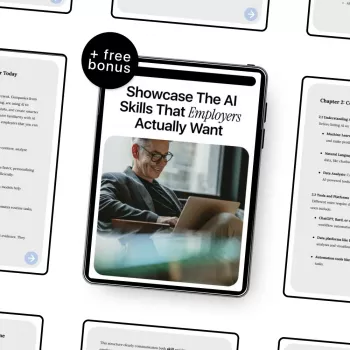
Teams moving quickly benefit from a single, action-oriented reference that speeds up governance setup, vendor evaluation, and internal alignment. How AI Is Reshaping Workplace Diversity – Practical Guide for HR, DEI & Future-Focused Leaders is designed for HR leaders, DEI practitioners, talent acquisition, people analytics, and executives accountable for ethical technology use.
For a lighter add-on that fits hybrid workspaces, consider the Creative Dice-Shaped Ashtray – Unique Desktop Accessory for Home or Office as a distinctive desktop item for offices that maintain designated outdoor or ventilated areas.
Yes, when objectives, data, and evaluation are designed to prevent adverse impact and the system is validated and audited over time. The strongest results come from combining measurement with clear human accountability rather than relying on automation alone.
Request model documentation, the features used, training data sources, subgroup performance results, and the audit methodology used to test fairness. Also confirm update cadence and secure contractual rights to be notified of changes and to conduct audits.
Provide notice that AI was used, a plain-language explanation of what influenced the outcome, and an appeal channel with timely human review. Include accommodations for disability or access needs and track appeal outcomes to detect patterns that require remediation.






Leave a comment